TLDR
SMS in India has become noticeably more expensive for businesses, while WhatsApp can be cheaper for the right message types and journeys. As of July 1, 2025, WhatsApp moved to per delivered template message pricing, and in India, marketing message prices increased to ₹0.86 per message from January 1, 2026
Why are SMS costs rising in India?
SMS costs rise mainly because business SMS is priced per submitted unit (and often per segment), with additional compliance and processing overhead like DLT scrubbing. The net effect is that long messages, regional language content, and high-volume flows (OTPs, order updates, KYC) can multiply SMS units and inflate spend quickly.
Does sending SMS cost money?
Yes. For consumers, SMS may be bundled in a mobile plan, but for businesses sending A2P SMS through a CPaaS or SMS gateway, you pay per SMS unit submitted (often plus DLT-related charges). Even small increases in per-SMS pricing can compound across OTPs, confirmations, and lifecycle updates.
How does SMS pricing work in India?
SMS pricing for businesses is typically a combination of your CPaaS API fee plus operator/compliance charges, and your final cost depends on how many SMS units your message turns into. In practice, costs often sit in the paise range per SMS unit, and segmentation is what silently increases your bill.
What counts as 1 SMS in India?
A single SMS unit is usually up to 160 GSM-7 characters. If your text exceeds the limit, it becomes a multi-part (concatenated) SMS where each part is billed separately (often 153 chars per part). If your message includes non-GSM characters and switches to Unicode (UCS-2), the limit drops to 70 chars (or 67 per part when segmented).
Do you pay even if an SMS is not delivered?
In most CPaaS setups, you are charged on submission to the operator, not on confirmed delivery. That means undelivered messages can still cost you money, which is one reason reconciliation between “sent” and “billed” often feels messy.
How does WhatsApp Business pricing work in India in 2026?
WhatsApp Business Platform fees are now primarily driven by per delivered template messages (marketing, utility, authentication), while replies inside the 24-hour customer service window remain free for service interactions. This makes WhatsApp ROI easier to track than conversation-window billing, especially for high-volume notifications.
Is WhatsApp priced per conversation or per message now?
Per message for templates. Starting July 1, 2025, Meta shifted from conversation-based pricing to charging per template message delivered, with pricing varying by category and sometimes by volume tiers.
What changed for WhatsApp pricing in India in 2026?
In India, WhatsApp increased marketing message rates from ₹0.78 to ₹0.86 per message effective January 1, 2026, and also announced plans to introduce local rupee billing for business users in India by the second half of 2026.
WhatsApp vs SMS cost comparison for Indian businesses
WhatsApp can be more expensive than SMS on a single-message basis, but it often becomes cheaper across a full customer journey when you bundle multiple updates inside an active WhatsApp window and reduce SMS segmentation waste. The winning strategy is not “WhatsApp only”, it is “route the right message to the right channel.”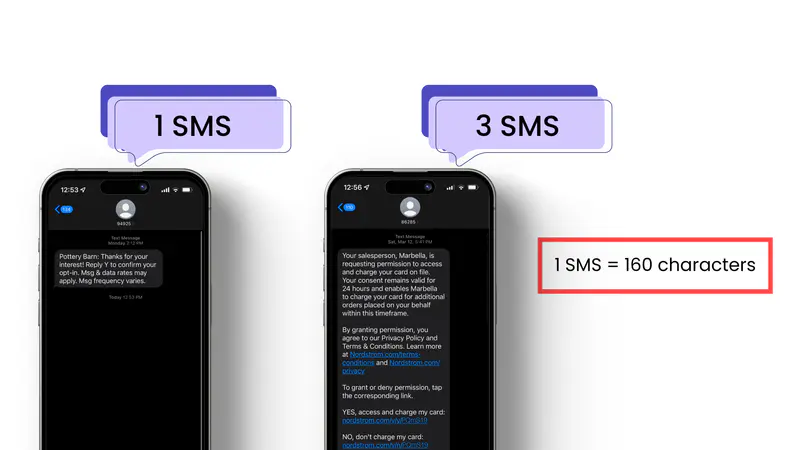
How to leverage WhatsApp to reduce SMS costs in India
You save on SMS when WhatsApp lets you compress multiple updates into fewer paid events and avoid SMS segmentation. The biggest wins come from (1) using free service and utility messages inside the 24-hour window, (2) routing long or regional-language messages to WhatsApp, and (3) moving high-frequency journeys to WhatsApp-first.
1) Use free service and utility messages inside the 24-hour window
Meta’s policy makes service replies inside the 24-hour customer service window free, and businesses can structure journeys so follow-up updates ride inside that window when possible. With per-message template pricing now standard, using the window strategically is one of the cleanest ways to cut costs.
Contextual example (same journey, lower spend):
A new-age investment tech startup sells fixed income securities. A typical purchase journey includes:
OTP for login
KYC confirmation
Investment confirmation
Account statement after allotment
If those are all SMS, you can end up paying for multiple SMS units (especially if templates get long or include Unicode). If you initiate WhatsApp engagement early, you can often send the subsequent updates inside an active WhatsApp window and reduce incremental SMS usage.
Cost breakdown (illustrative, based on the original logic):
OTP: SMS first, WhatsApp as failover if needed
Follow-ups: WhatsApp inside the active window where eligible
This is how SMS costs get neutralized for messages triggered while the WhatsApp window is active, without sacrificing deliverability.
2) Use WhatsApp when messages exceed SMS character limits
SMS segmentation is a hidden tax. The moment your template crosses limits (names, links, order IDs, regional languages), a “single SMS” can become 2–3 billed units. WhatsApp avoids character-based segmentation pricing, so routing long transactional updates to WhatsApp can materially reduce unit-based SMS costs.
Rule of thumb: If your message commonly crosses 160 GSM-7 characters (or switches to Unicode), WhatsApp is often the cleaner cost choice.
3) Prioritize WhatsApp for high-frequency updates
High-frequency journeys (e-commerce delivery updates, returns, quick commerce, day-of-travel notifications) can generate 5–7 notifications inside 24–48 hours. SMS charges stack per notification (and per segment), while WhatsApp can reduce “paid events” depending on how you structure templates and windows.
This is why WhatsApp-first often wins for:
Order and shipment milestone updates
Return pickups
Quick commerce status updates
Travel-day operational alerts
WhatsApp's pricing structure
WhatsApp pricing structure is relatively flat and straight forward. WhatsApp now charges businesses per delivered template message (instead of per 24-hour conversation window), with rates varying depending on the type of message and the country of the recipient. You can still use the 24-hour customer service window for service conversations.
The charge is only when messages you send to customers are delivered. The following are the charges in India (effective January 1, 2026):
Marketing message: INR 0.8631
Utility/ transactional message: INR 0.1150
Authentication: Same as utility/ transactional (INR 0.1150)
Service/ Support: n/a (free within the customer service window)
If you are using a BSP to access WhatsApp APIs, then you would be paying ~ 10-25% higher.
How to leverage WhatsApp to SMS costs?
Now that we have understood the pricing structure for both SMS and WhatsApp, let's look at intelligent ways to save SMS cost by leveraging WhatsApp.
1. Leverage Meta’s free service and utility messages

If you are engaging users on both SMS and WhatsApp, then here’s what you should know:
With Meta’s updated pricing model for WhatsApp, businesses have more opportunities to cut costs by strategically categorizing and routing messages. Service conversations are free within the active 24-hour customer service window, and utility templates sent within that same window can also be free. On top of this, WhatsApp now charges primarily per delivered template message (instead of per 24-hour conversation), which makes it easier to measure ROI and optimize routing decisions.
By aligning message types with these pricing rules and using the active WhatsApp window intelligently, businesses can reduce their reliance on SMS and significantly lower overall communication expenses.
This is a classic example of how SMS cost can be completely neutralised or eliminated for all the SMS that get triggered to users where the WhatsApp customer service window is active.
Let's understand this with a contextual example and numbers:
A new age investment tech startup sells fixed income securities to a users. A purchase journey of the individual will generally include logging into the application, completing his / her KYC, selecting the security/ bond and then finally making the investment. Now let's look at the bare minimum notifications that the company would send to the user:
OTP for authentication at the time of login
KYC confirmation once the KYC is confirmed.
Investment confirmation once the investment / payment is done.
Investment account statement after allotment of the bond.
This could mean 4 SMS costing of 15 paise each = 60 paise.
At the time of login, in order to avoid drop-offs, businesses may send OTP via SMS and WhatsApp to ensure 100% of their OTPs get delivered in time. If they have a sophisticated tech like Fyno, they can manage delivery failover to send WhatsApp only to users where SMS does not get delivered or vice-versa.
Now if the user completes the other steps of KYC verification and completing the investment, here's where the WhatsApp 24 hour active window / conversation can be leveraged to ensure all next subsequent notifications like KYC confirmation, investment confirmation and account statement can be sent on WhatsApp without incurring any incremental cost of SMS. This can potentially save cost of 3-4 SMSs.
2. Use Whatsapp for messages exceeding 160 characters

As understood above in the SMS pricing structure, SMS costs ~ 15 paise for 160 characters. This means that if the message size goes beyond 160 characters, it would cost ~ 30 paise, which is the equal to the cost of 1 WhatsApp with 24 hour conversation window.
Most of the times, when companies send transactional communications, the message content would generally contain variable placeholders like name, tracking link, order ID etc.
When these placeholders are replaced at the time of sending the notification with actual values, the character count of messages can increase and go beyond 160 characters. This could end up costing 2 SMS.
Where regional content is used (which is very common for tier 2 and 3 consumers), the character count per SMS reduces to 60 and hence, it could cost the business 3 SMS or more, for delivering a single message!
In such scenarios, it is worthwhile to intelligently use an automated mechanism that prioritises WhatsApp when the message count increases to 2 or 3 after considering the variable placeholders.
Recommended Read: WhatsApp vs WhatsApp Business
3. Prioritise WhatsApp for high frequency updates
Let's look at a quick example to understand this. You have ordered from an e-commerce brand and there is a delivery promise that the product will be delivered in 24-48 hours.
In general, there will be the following updates that you will receive in your order delivery cycle:
Order received message / acknowledgement
Order confirmation message with order ID
Order processing message with ETA for delivery
Order dispatch notification
Order out for delivery
Order delivery OTP (for high value deliveries)
Order delivery confirmation
Some companies may skip or add additional messages, but largely, you can expect 5-6 messages in the order fulfilment cycle.
If these communications are sent using SMS, it will only make sense from a cost perspective if the fulfilment cycle is spread out for more than 3 days.
But in majority of e-commerce pin codes, given the advancement of warehousing, logistics and fulfilment operations, most of the orders get delivered within 48 hours. Some brands are also promising same day delivery. Checkout Blitz, which manages same day fulfilment or delivery for many D2C brands.
In such scenario, it will always make sense to initiate the communication only using WhatsApp, since businesses will be charged for 1 WhatsApp conversation instead of 5-6 SMS. Even if the fulfilment spreads over 2 days, it will still turn out to be a cheaper alternative. 
The same logic can also be applied in the following industry/ segments:
Return pick up by e-commerce companies/ their logistics operators.
Online booking companies like Booking.com, AirBnB, Expedia on bookings managed by them.
Quick commerce companies for high frequency and repeat customer orders.
Travel industry (including Airlines) that send multiple messages to the travellers on the day of their journey.
The Complexity Behind Implementation
Now that we've seen that meaningful and substantial SMS cost optimisation is possible using WhatsApp, I wonder why are businesses not doing it.
Implementing these cost-effective messaging strategies involves navigating a series of technological challenges. To fully realize the cost-saving potential of WhatsApp over SMS, businesses must have access to an advanced technological infrastructure capable of making real-time, data-driven decisions about the routing of each message. This infrastructure needs to:
Automate Message Routing: Determine the most cost-effective and efficient channel for each message in real-time, whether it's SMS or WhatsApp. This involves analyzing factors such as the type of message (transactional vs. promotional), the recipient's preferences, and historical engagement data to ensure optimal deliverability and cost savings.
Measure the 24-Hour Open Window on WhatsApp: Implement sophisticated tracking mechanisms to identify and exploit the 24-hour window during which messages can be sent to WhatsApp users without incurring additional charges. This requires a dynamic monitoring system that can adapt to each customer's interaction timeline, ensuring that businesses can send follow-up messages or important notifications within this cost-effective window.
Conduct Intensive Data Analysis for Automated Routing: Utilize advanced analytics to process vast amounts of data on message delivery rates, user engagement, and channel efficiency. This analysis informs the automated routing system, enabling it to learn and adapt over time, optimizing message delivery paths based on evolving patterns of success and user behaviour.
The Limitation of Absolute SMS Replacement
While WhatsApp offers significant advantages in terms of engagement and cost, it's important to recognize that SMS still plays a crucial role in certain scenarios. For instance, SMS remains a universally accessible communication channel, requiring no internet connection and being available on every mobile device. This universal accessibility makes SMS indispensable for critical alerts, one-time passwords (OTPs), and situations where immediate deliverability is paramount.
Moreover, regulatory requirements and user preferences may necessitate the continued use of SMS alongside WhatsApp. A sophisticated messaging strategy, therefore, does not seek to replace SMS entirely but to intelligently choose between SMS and WhatsApp based on the specific context and requirements of each message. Checkout our detailed coverage on this topic here.
Fyno: The Sophisticated Solution

In the face of these complexities, most businesses find the development of an in-house solution to be prohibitively expensive and technically challenging. This is where Fyno comes into play, offering a comprehensive messaging platform designed to manage these challenges end-to-end.
Automated Channel Failover and Intelligent Routing: Fyno's platform is engineered to ensure that each message is sent through the most effective channel. By employing automated failover mechanisms, Fyno guarantees high deliverability rates, automatically switching between SMS and WhatsApp based on real-time delivery feedback and pre-defined rules tailored to the business's objectives.
Leveraging the 24-Hour Window for WhatsApp Users: Fyno excels in tracking and utilizing the WhatsApp 24-hour conversation window, enabling businesses to send timely follow-ups and notifications without incurring additional costs. This capability is crucial for maintaining engagement while optimizing messaging expenses.
Data-Driven Decision Making: At the core of Fyno's offering is a robust analytics engine that processes data on messaging trends, delivery success rates, and user interactions. This engine powers the platform's automated routing decisions, ensuring that businesses can achieve both cost reduction and improved communication effectiveness.
Comprehensive Messaging Strategy Support: Beyond the technological capabilities, Fyno provides strategic support, helping businesses craft messaging campaigns that are not only cost-effective but also aligned with their broader communication goals. This includes advising on message content, timing, and segmentation to maximize engagement and ROI.
Recommended Read: 6 benefits of working with a Meta tech partner vs BSPs
Conclusion
WhatsApp is not always cheaper than SMS per message, but it can be dramatically cheaper across journeys when you design for windows, reduce segmentation waste, and prioritize WhatsApp for high-frequency updates. With per-message template pricing now the norm, and marketing rates in India updated in 2026, the biggest savings come from smarter routing, not louder blasting.