TL;DR
A WhatsApp Business account is designed for small and growing businesses that want a simple, low-cost way to communicate with customers. It offers business profiles, automation, and catalogues. As message volume, compliance, or integration needs grow, businesses often move to WhatsApp Business API or CPaaS platforms.
What is WhatsApp Business?
WhatsApp business, is a version of WhatsApp built specifically for businesses to communicate with customers using a verified business profile, automation tools, and product catalogues. It enables businesses to send updates, answer queries, and manage conversations more professionally than a personal WhatsApp account.
Unlike enterprise APIs, WhatsApp Business is app-based and primarily designed for small teams and owner-managed businesses.
This essentially means that a small business, with mostly the proprietor or owner of the business running the show, will also run the WhatsApp Business account from the convenience of his mobile or WebApp device. It's that simple.
How is WhatsApp Business different from regular WhatsApp?
WhatsApp Business differs from personal WhatsApp in purpose and features.
WhatsApp Business focuses on customer communication, not personal messaging.
Who should use WhatsApp Business?
First things first, though. Is this the right fit for your business? Ideally, the right audience for such a WhatsApp Business setup is:
Home-grown businesses like salons, hardware stores, cafes and even boutiques
Online retailers like influencer fashion or merchandise sale services where can use WhatsApp business to set up sales.
Service-based Businesses, such as life coaching and health coaching, can then use WhatsApp Business to set up their services for clients.
Organisations and communities for setting up volunteer programs and sign-up processes for available programs.
Travel and Hospitality businesses, such as local tour guides or vehicle rentals, are located in cities so that tourists can easily contact them and peruse their services at a glance.
Users can manage both personal accounts and business accounts on the same device, provided they have separate phone numbers for each account. So, without further ado, let’s dive right in!
The benefits of using WhatsApp Business
Enhanced customer interaction: Automated greetings, quick replies, and labels help businesses respond faster and appear more professional.
Cost-effective marketing and support: WhatsApp messages are often cheaper than SMS or voice calls, especially for frequent updates and support.
Rich media capabilities: Businesses can share images, videos, documents, and product catalogues to enhance engagement.
Improved organisational efficiency: Companies can quickly organise, track, and manage customer interactions using tools like labels, chat history, and a comprehensive product catalogue using the Whatsapp business features.
Scalable for business growth: As your business grows, WhatsApp Business grows with you. It allows connection to multiple devices and offers tools that can handle a higher volume of messages, which is perfect for expanding your outreach without compromising the quality of customer interactions.
Things to keep in mind while creating a WhatsApp business account
Before setting up a WhatsApp Business account, remember:
WhatsApp becomes your official customer communication channel
Profile details must reflect your brand accurately
Message volume is limited compared to APIs
Compliance and audit features are minimal. As businesses scale, these limitations become important decision factors.
Once you have decided that WhatsApp Business is the right choice for your business, we can get started with the following steps:
Installation and set-up of WhatsApp Business account
Integrating with other business tools
Best practices for a stellar WhatsApp Business account
Advanced settings to boost your WhatsApp Business account
We need to remember throughout the entire process that WhatsApp will now be the official communication channel for your business, and this needs to be correctly represented with the features made available in this version.
Setting Up Your WhatsApp Business account
The installation of WAB is quite simple. Depending on your OS, you must access the Apple Store or Play Store to find and install the WhatsApp Business application.
Once installed, the application will walk you through the basics of the sign-on process. You can choose to use your existing number (which will be auto-detected if you are using the same device the SIM is plugged into) or register with a new number exclusively for the business along with your business address.
It is crucial to set up a professional business profile to build credibility and trust with customers on a secure platform.
💡 An important point to keep in mind here is that if your business has already been associated with the number that you were using, then it is wise to use the same number and plan to transition the number later once brand recognition and association have been established with the name and not the number!
Integrating with business tools
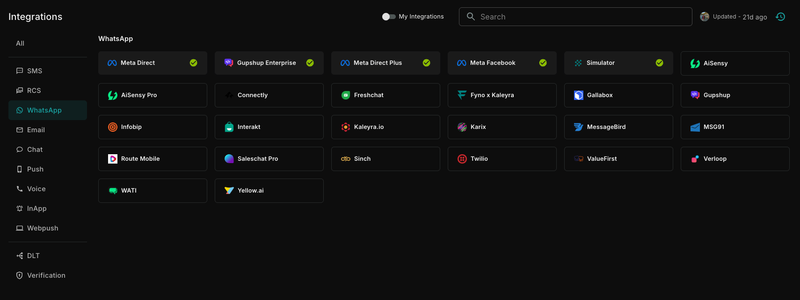
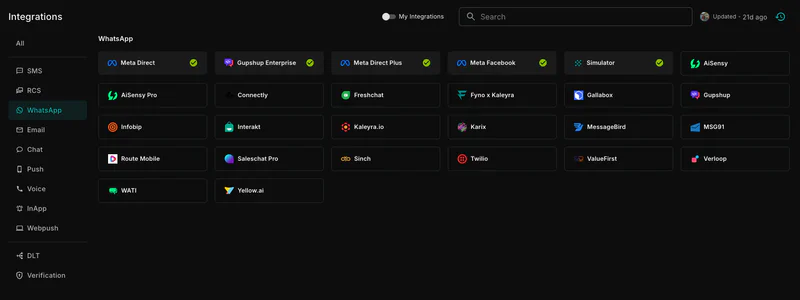
Integrating WhatsApp Business with other business management tools can streamline operations and enhance customer interactions. Here’s how to do it:
API Integration: Use the WhatsApp Business API to integrate with CRM systems, e-commerce platforms, and more. This allows for the automation of messages and synchronization of customer data.
Utilize built-in tools: WhatsApp Business offers built-in tools that support integration, such as catalogue features for showcasing products and services directly through the chat interface. Additionally, messaging tools can be used to set up automated responses, thereby enhancing communication efficiency between the business and its customers.
Leverage third-party solutions: Many third-party tools and services offer ready-made integrations with WhatsApp Business, which can help extend its functionality without the need for extensive custom development.
Best practices for a high-performing WhatsApp Business account
You can do multiple things to set up an excellent and informative profile, which your clients can leverage to learn more about your business.
Add a cover photo: We have seen the banner concept on LinkedIn and Facebook profiles. WAB’s Cover Photo is the same concept. The idea behind this is that it acts like a supporting image that reinforces your business’ brand image. We strongly suggest you not use the same image as the one you use for the Business account display.
Add a business description and category: A good business description is very important to ensure that your clients or potential clients across your profile get a clear sense of what you’re selling. While your business name may not reflect your company’s work, writing a short and crisp description can help turn it around.
A pro tip is to remember to end the description on a hook, or a “reason to return”, if you will. For example:
Business description for a locally sourced vegetable store without a hook: Various locally sourced fruits and vegetables are available from 8 am - 8 pm.
Business description for a locally sourced vegetable store with a hook: We have various locally sourced fruits and vegetables, adding exotic new varieties daily. Check out our catalogue for more details between 8 am - 8 pm.
Adding a category helps bucket our business into the relevant categories, provides credibility, and makes it easier for a person who is looking at your business to have a glance and understand what you are in the business of
💡 image of the above examples in screenshots
Highlight free and paid features: WhatsApp Business offers a blend of free and paid features. While it is free to download and use, certain functionalities require a subscription or payment. These premium capabilities can significantly enhance your business operations and customer interactions. Leveraging both free offerings and premium features can provide substantial value to your business.
Add your working hours and how you can reach you: Keeping your clients informed about how to reach you by different modes **creates a redundant structure, allowing them the flexibility to connect with you regarding service, product, or query.
Therefore, it is recommended that you update your “Website” (another way for them to log in and possibly look around your products, services, etc.), “Email address,” “Contact number,” and “About” information. Keeping them informed about your working hours is just good business etiquette.
Adding these details would not take you more than a few minutes. Easy, right?
Leveraging WhatsApp Business for enhanced customer interaction
WhatsApp Business transforms customer interactions by offering features like the WhatsApp Business app, business profiles, product catalogues, and automated greeting messages. These tools help businesses appear more professional and accessible.
Automating customer service
Instant replies: Set up automated responses to frequently asked questions, reducing response times and ensuring that customers receive immediate assistance.
Chatbots: Integrate chatbots to handle basic inquiries and transactions, freeing up human agents to tackle more complex issues.
After-hours support: Configure after-hours messages to inform customers when to expect a reply, maintaining communication without manual intervention.
Utilising WhatsApp Business API
Large-scale deployment: For enterprises needing more control and integration, WhatsApp Business API allows businesses to automate large-scale communications and deeply integrate with existing systems.
Advanced features: To manage customer interactions more efficiently, utilize features like high-level security protocols and support for multiple user agents. For example, a financial institution might use the API to send personalised banking alerts or fraud warnings.
Data integration: Seamlessly integrate with CRM systems to leverage customer data for personalized communication.
Conclusion
WhatsApp Business is a powerful tool for businesses aiming to improve their customer communication. By setting up this platform, you can offer more responsive support, create more valuable customer connections, and boost your sales through a more engaging and personalized approach. Whether you are a small shop or a large corporation, WhatsApp Business can be tailored to meet your specific needs, helping you to manage customer interactions efficiently and securely.