7 to 9 October 2025
Jio Convention Center
Explore
FYNO CAMPAIGNS
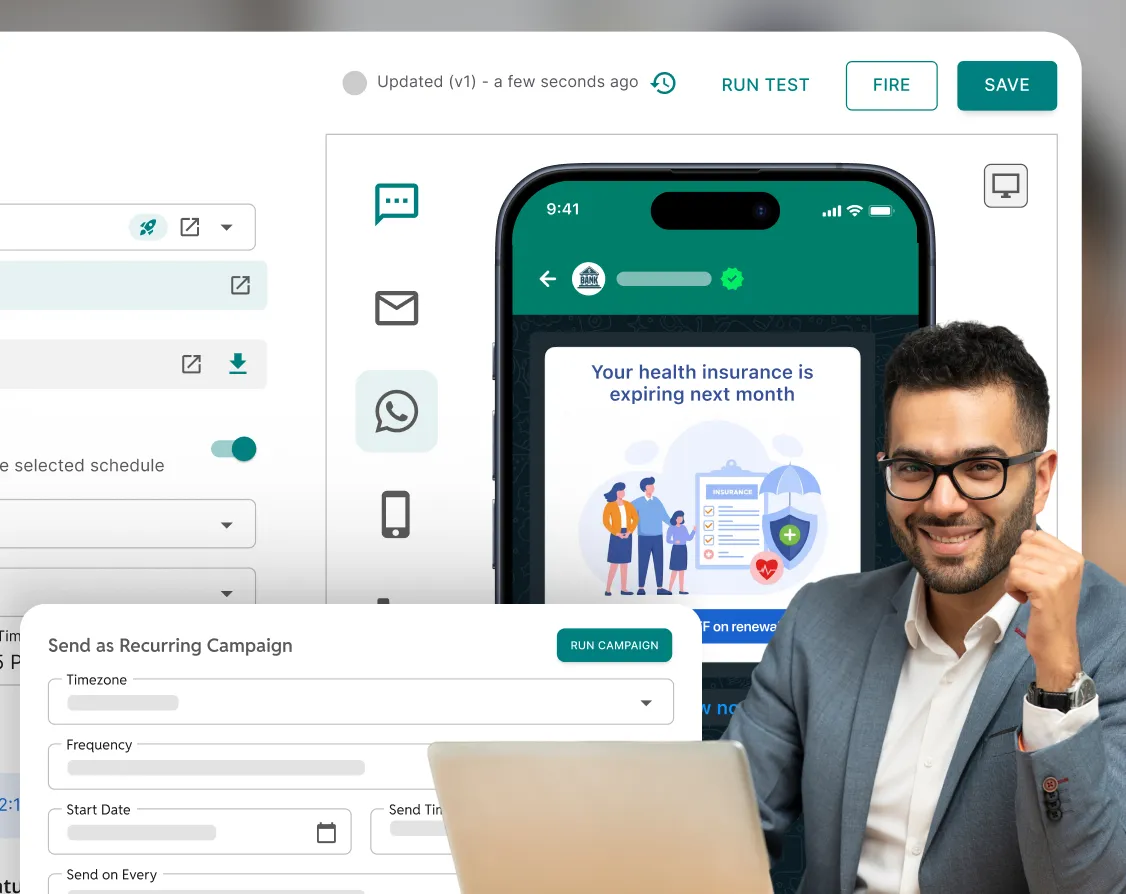
Run event-driven, scheduled, or recurring campaigns from one platform. A/B testing and consent are validated at every dispatch

.webp)

.svg)
.svg)
.svg)


.svg)

.webp)

.svg)


EVENT TRIGGERS
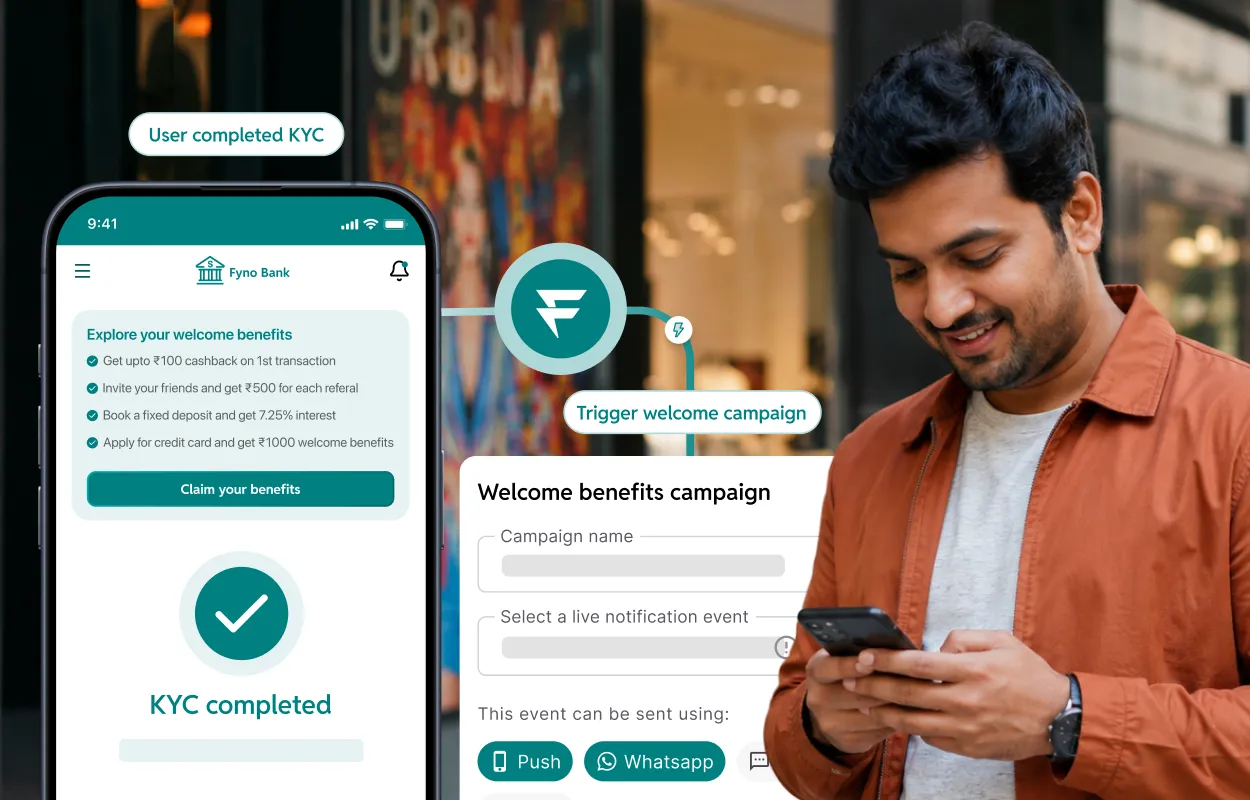
Customer completes KYC, crosses a tenure threshold, or triggers a rule. Campaign fires.
REAL-TIME AUDIENCES
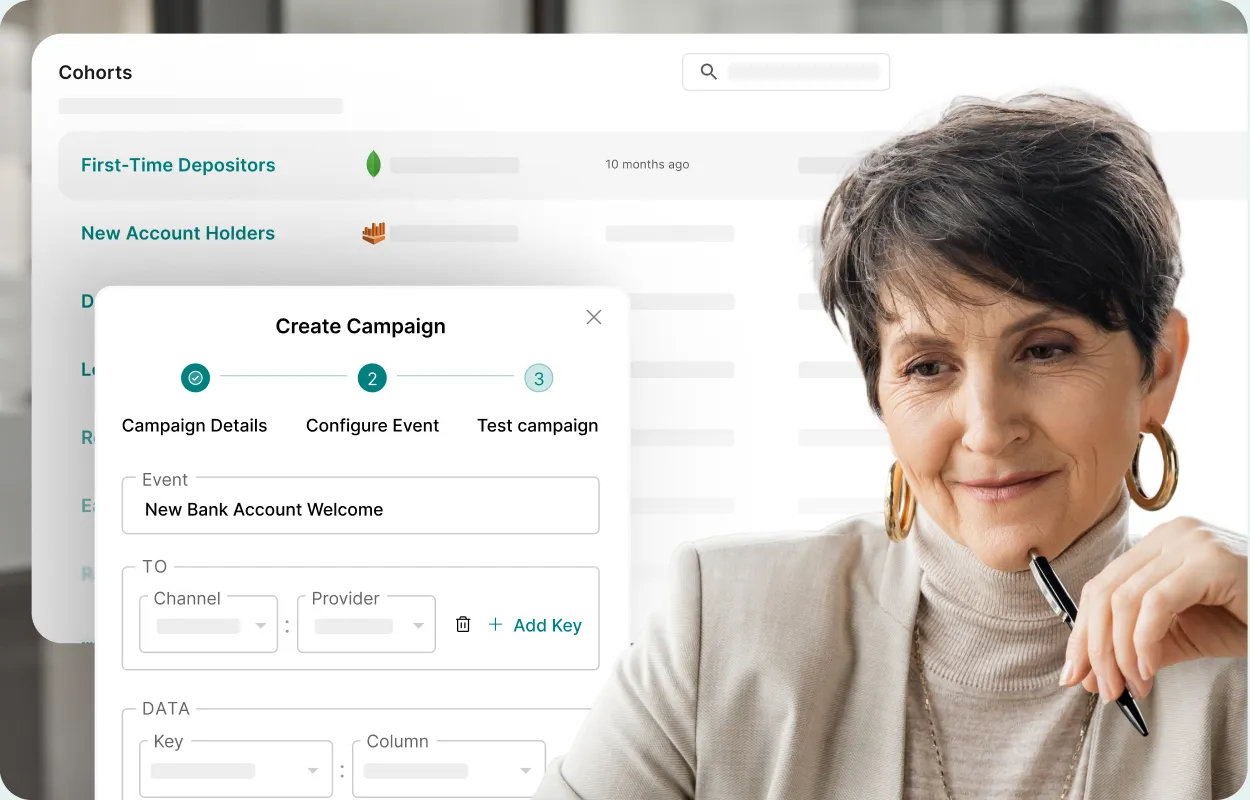
Pull live cohorts from your CDP. Only current qualifiers receive the message.
Scheduled sends from uploaded or curated audiences
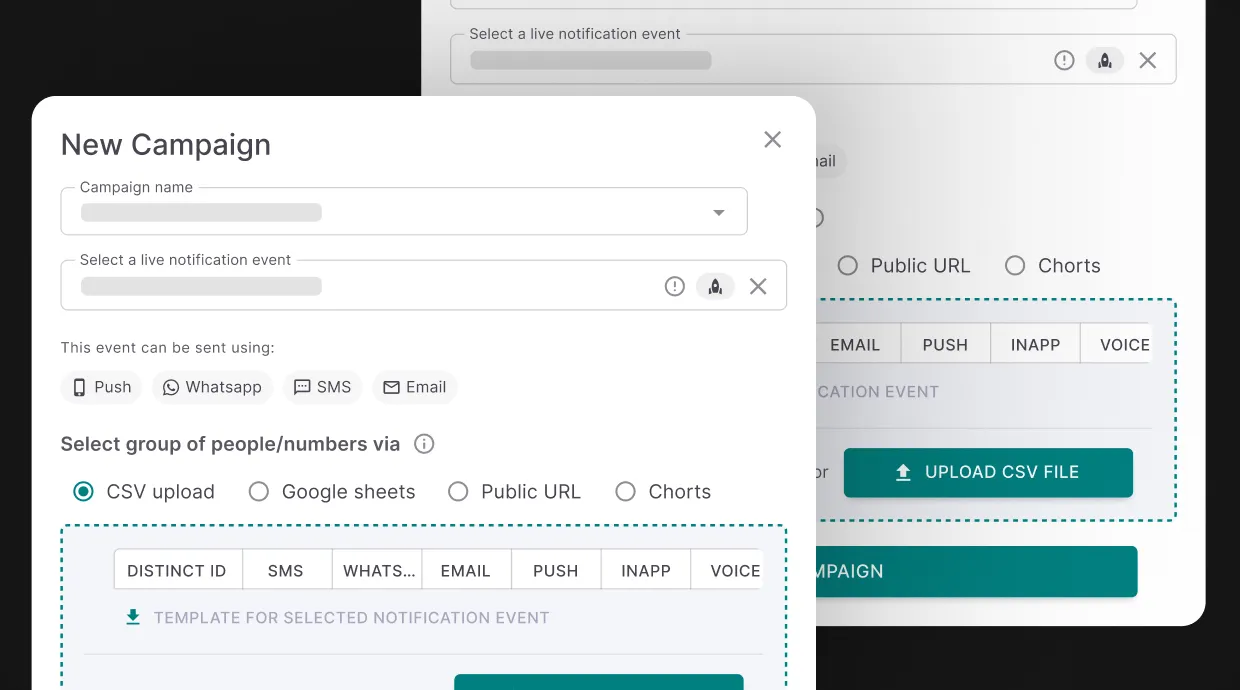

LIST-BASED UPLOADS
Upload Excel or CSV, or schedule SFTP drops. Fields mapped. Consent validated.
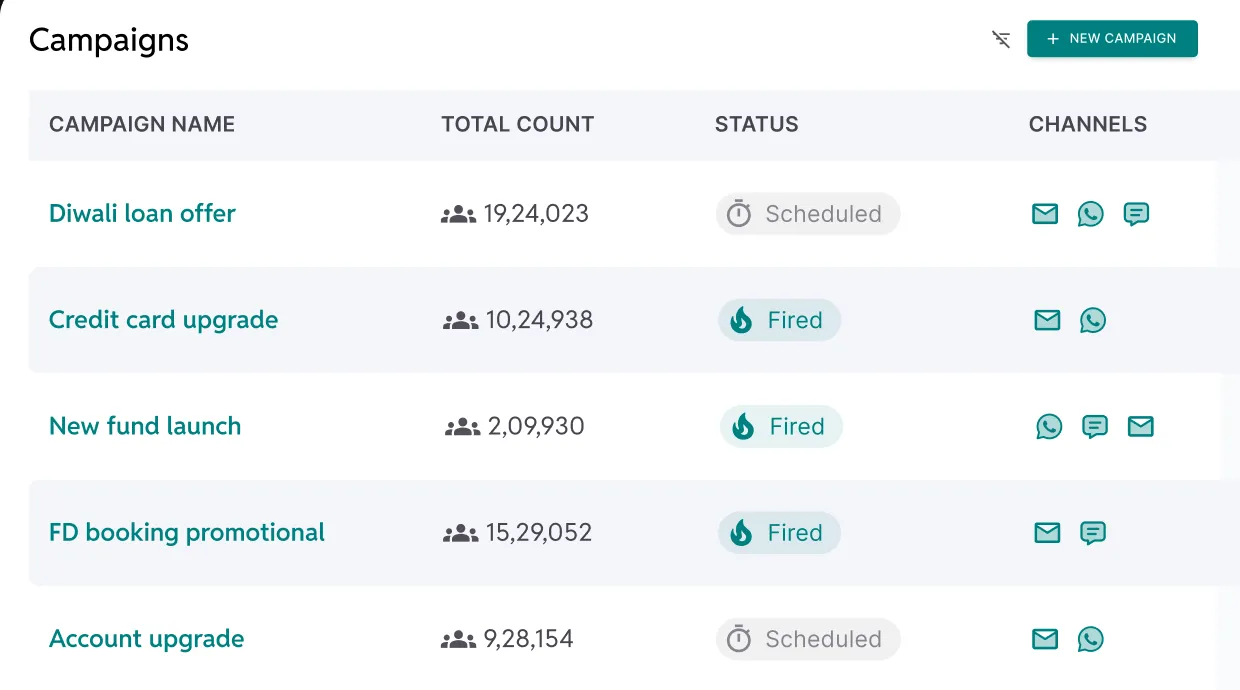
ONE-OFF CAMPAIGNS
Festival offers, product launches, regulatory notices. All channels at once.
Recurring campaigns that run on rules and schedules
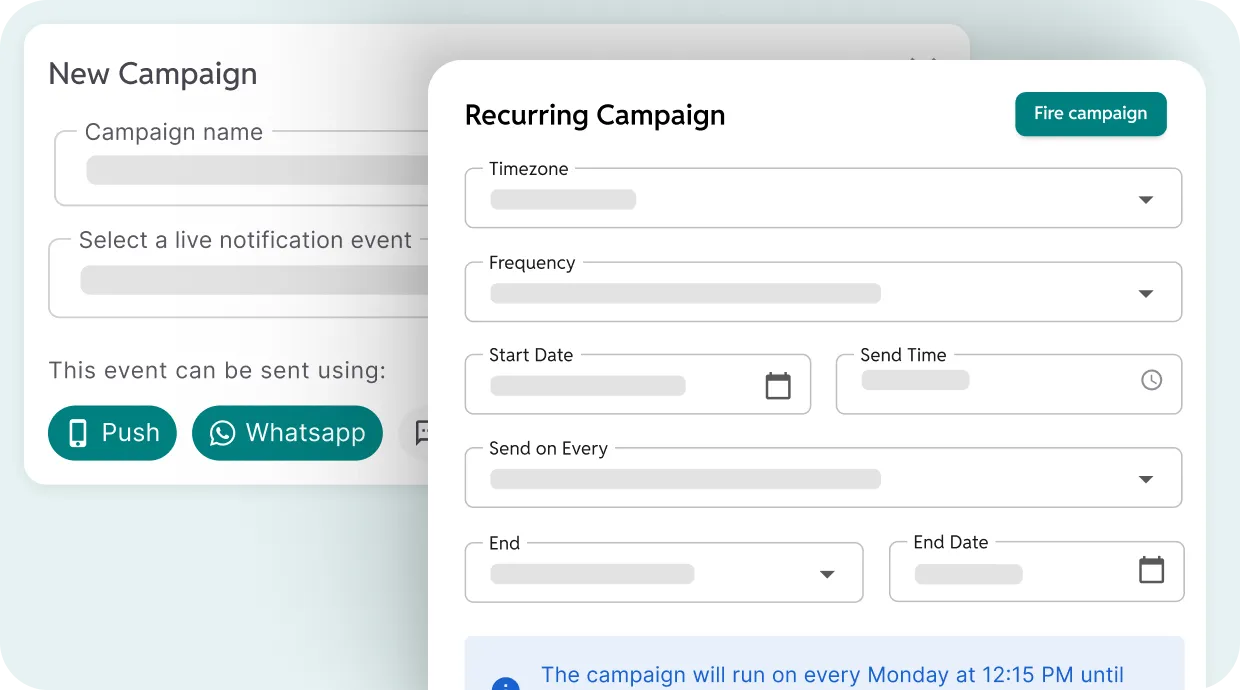
LIST-BASED UPLOADS
Upload Excel or CSV, or schedule SFTP drops. Fields mapped. Consent validated.
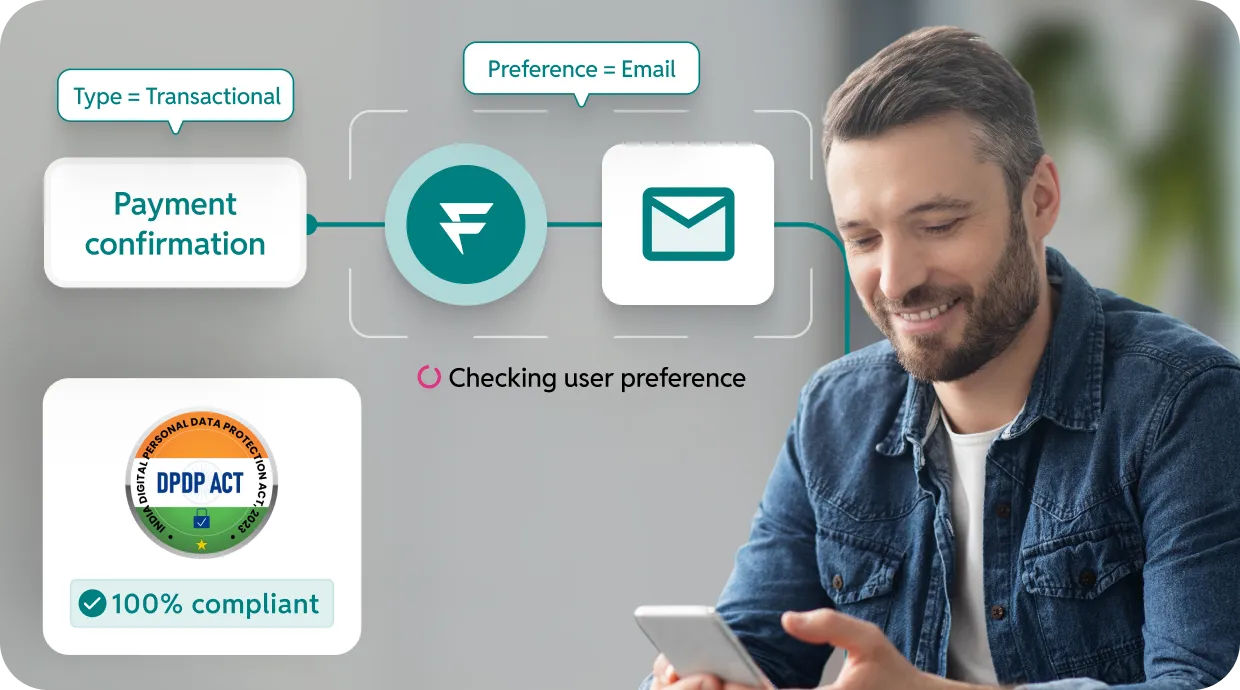
ONE-OFF CAMPAIGNS
Festival offers, product launches, regulatory notices. All channels at once.
Campaign analytics that drive channel and vendor calls
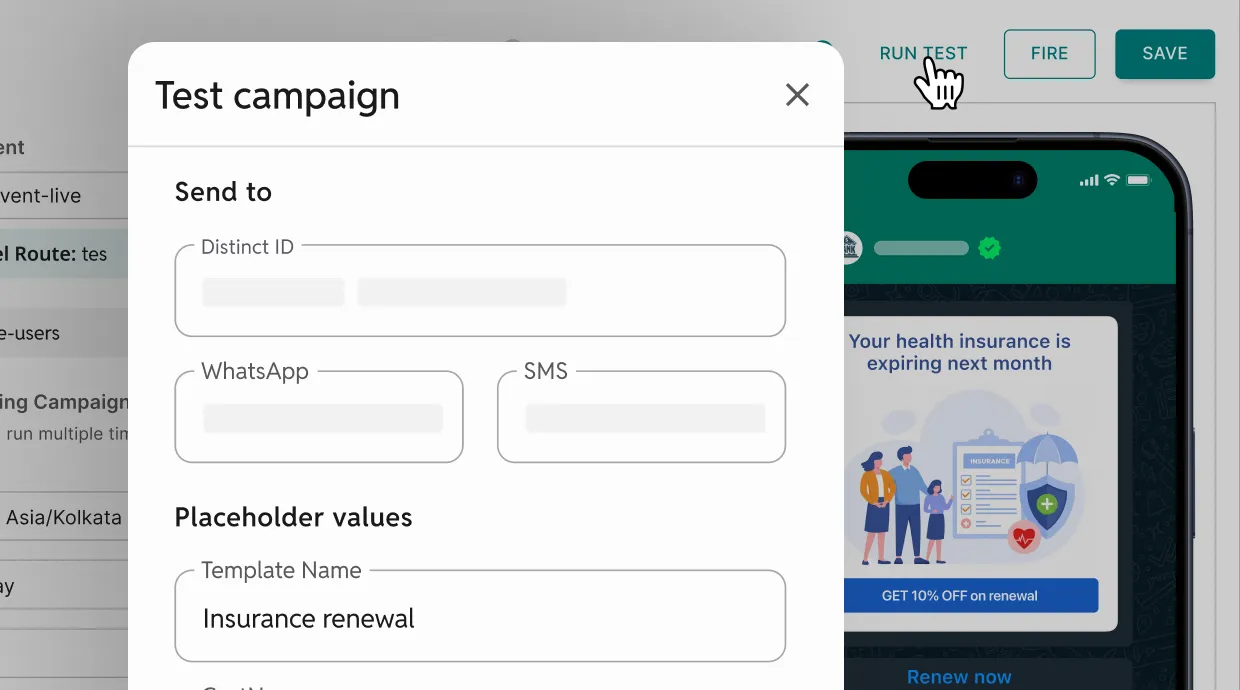
A/B TESTING AT SCALE
Send variants to a subset. Measure delivery and engagement. Pick the winner.
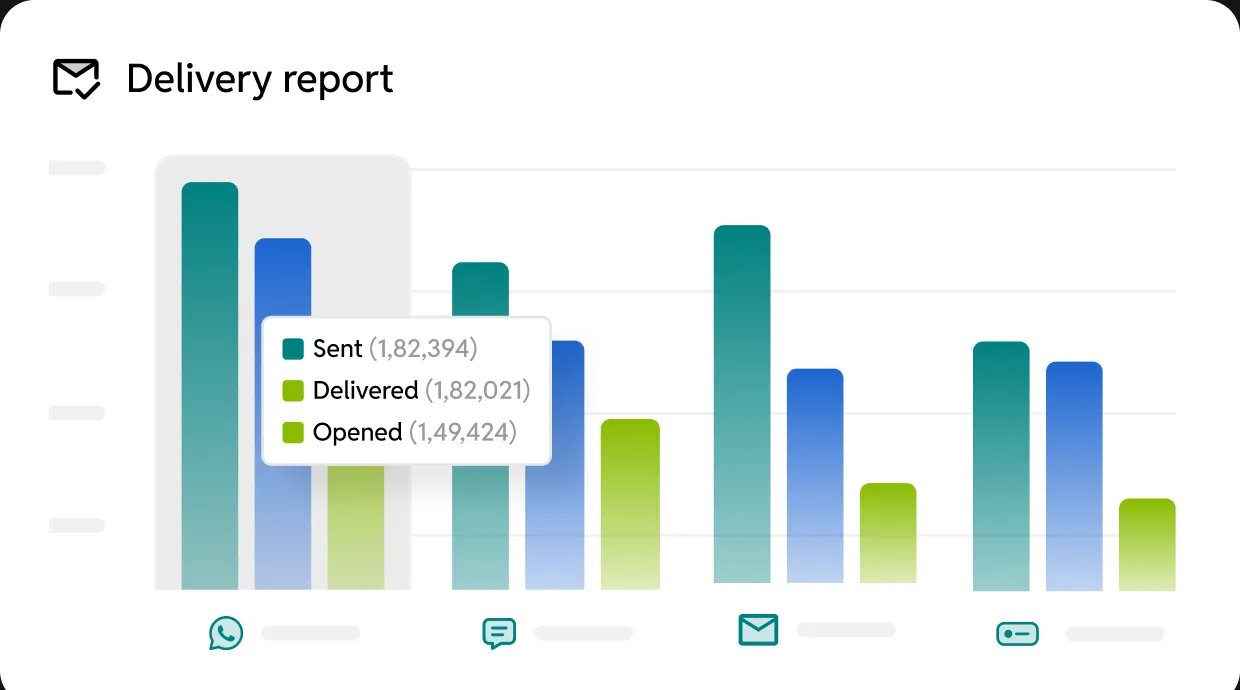
MULTI-CHANNEL ANALYTICS
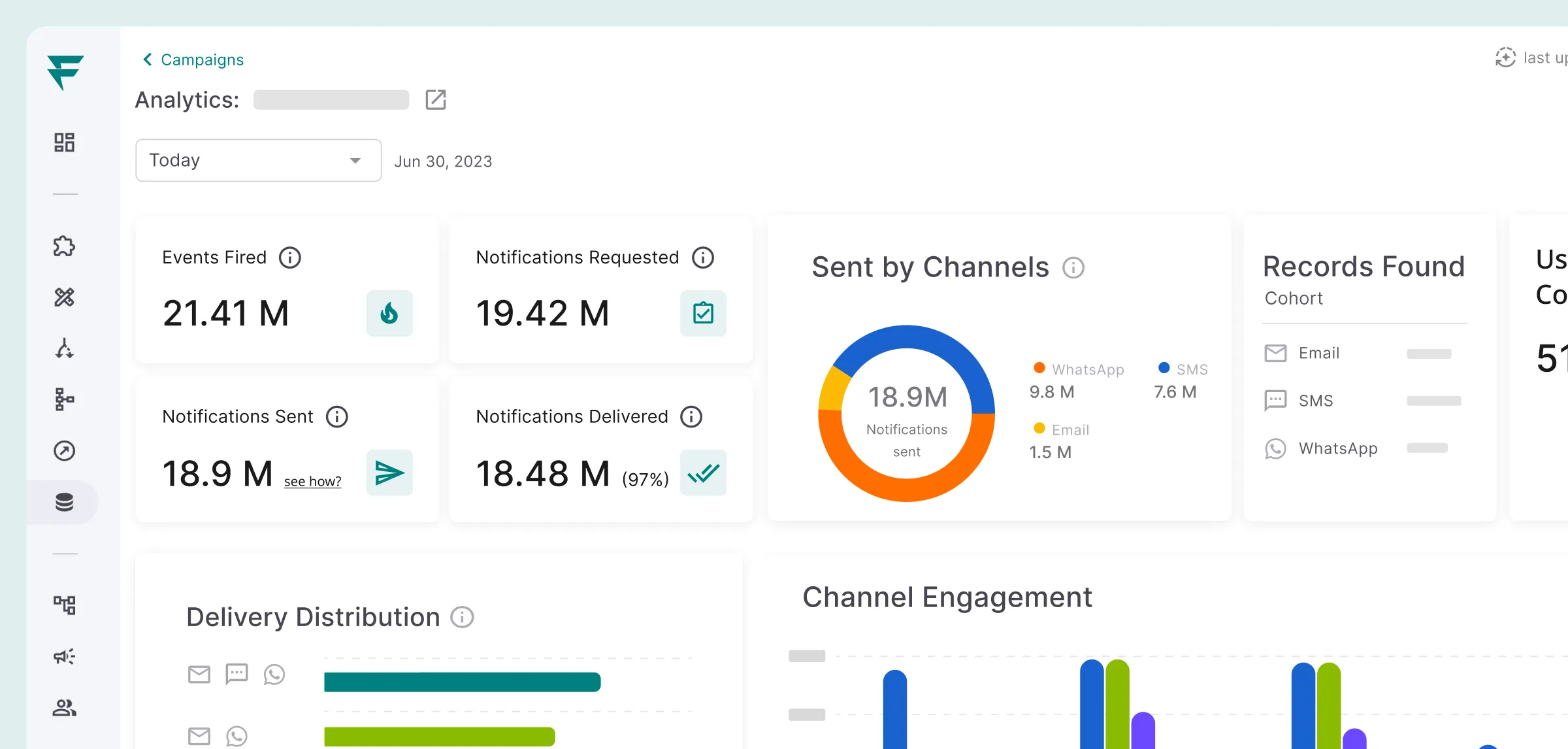
Delivery, open, and click rates per channel. Cost per outcome tracked.
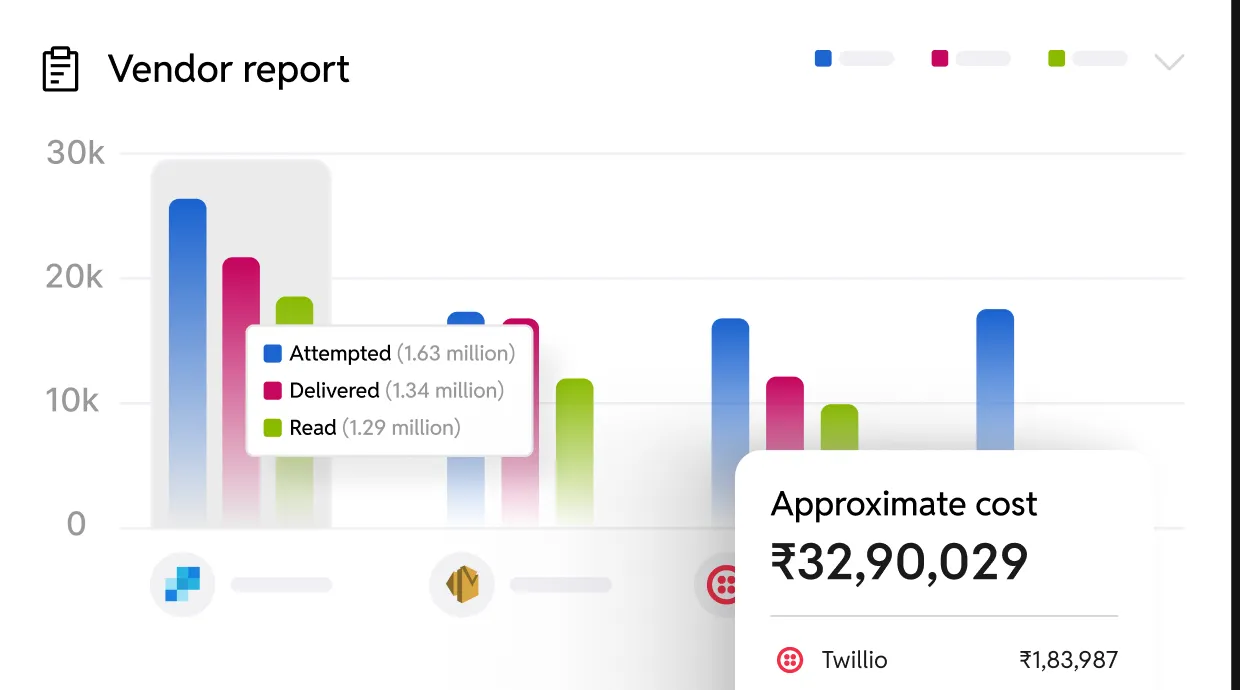
PROVIDER-LEVEL METRICS
See which provider delivered best per campaign. Data-driven vendor decisions.
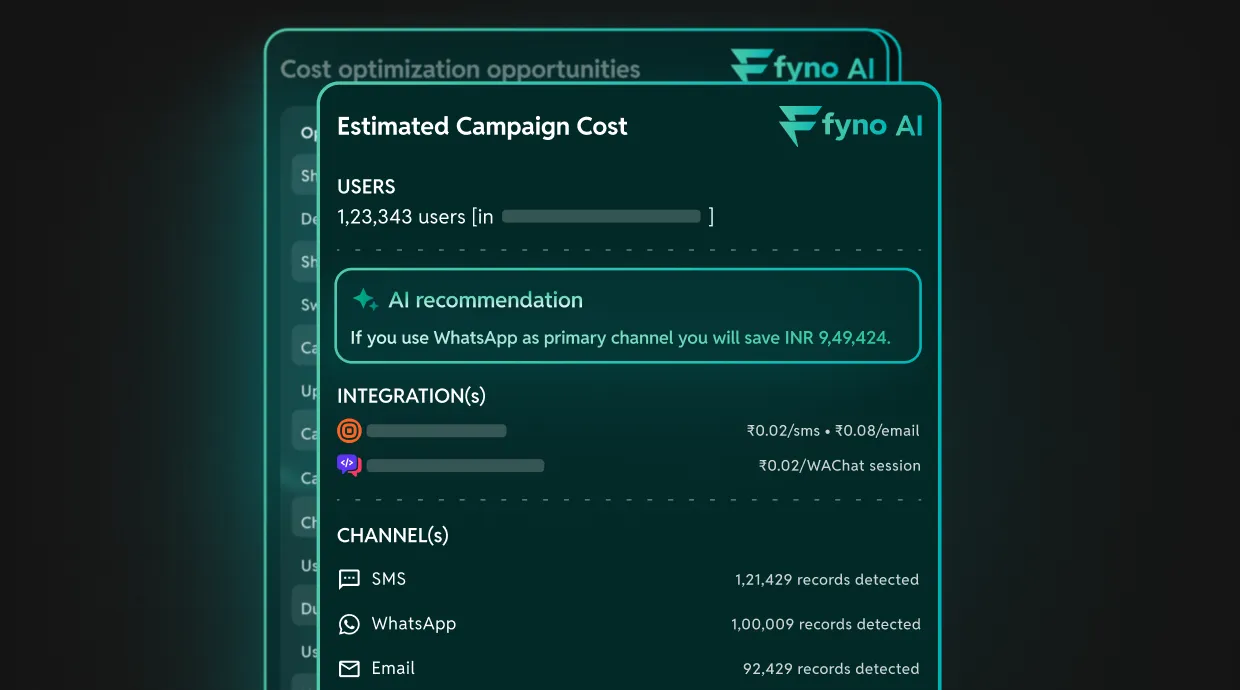
REAL-TIME COST PREVIEW
Cost breakdown by channel, audience size, and SMS segments before dispatch.
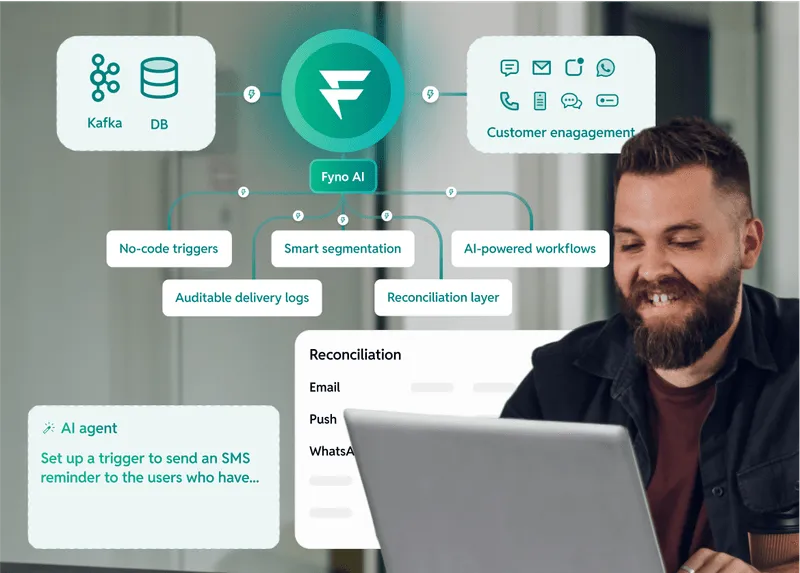
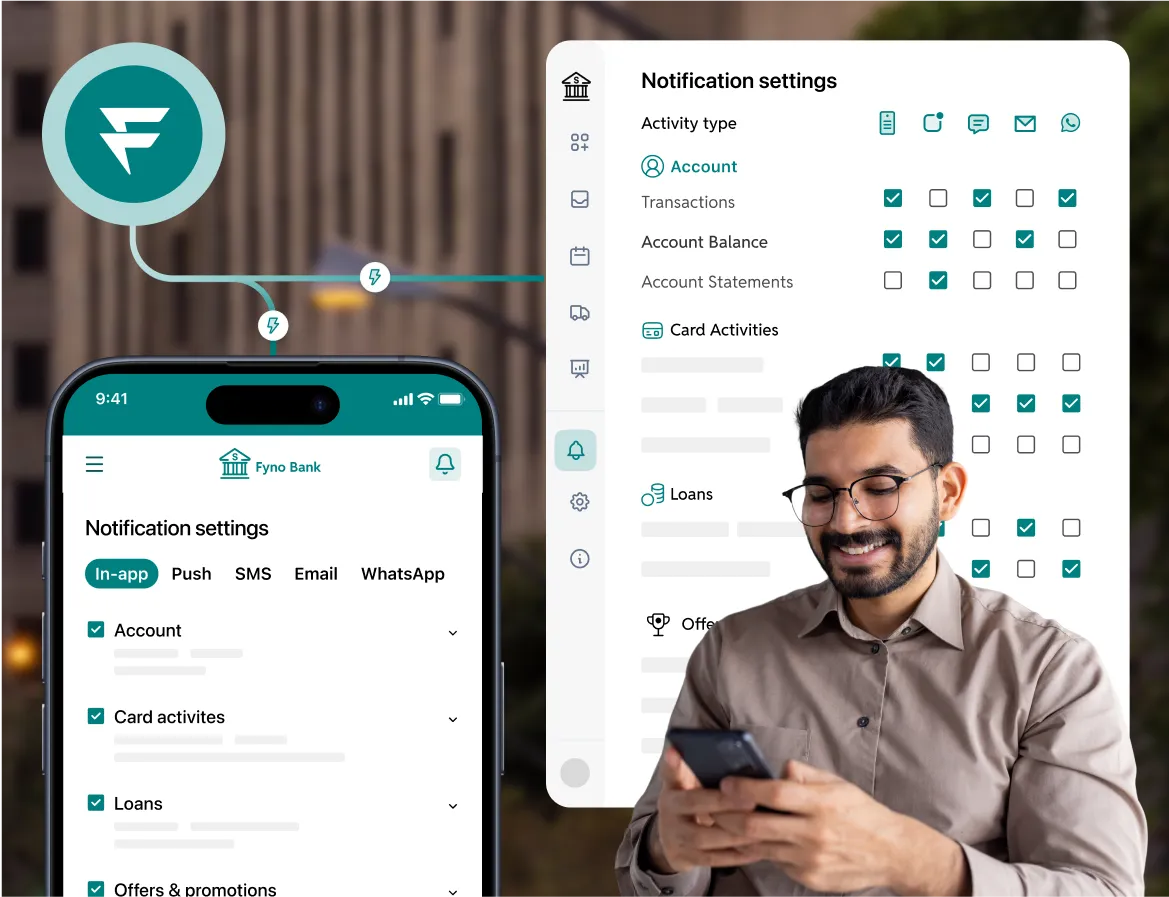
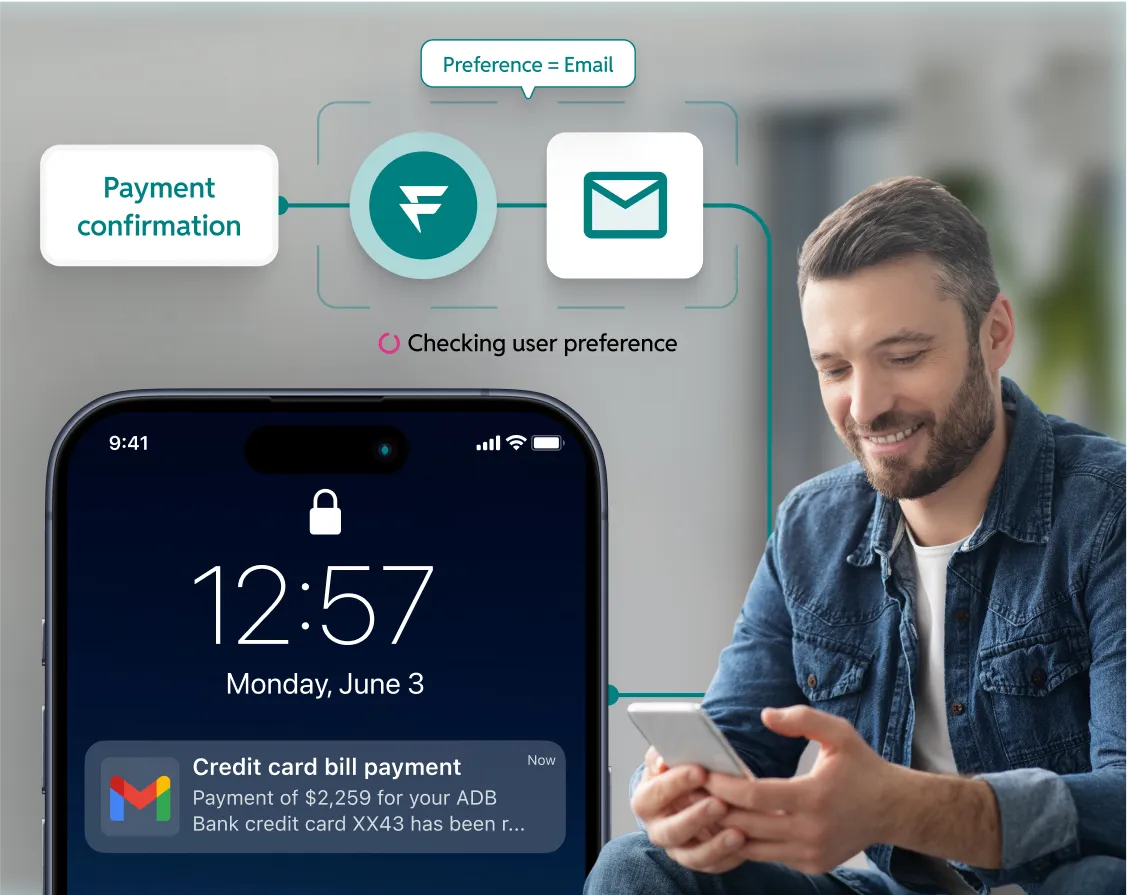
The TRAI direction issued under TCCCPR 2018 requires all variable fields in SMS content templates to be pre-tagged with descriptive labels specifying content type, purpose, and validation criteria — for example, #number# for OTPs, #url# for links, #alphanumeric# for reference IDs. Fyno’s DLT Template Management module builds variable tagging into the template creation flow. When you define a variable in the editor, you assign the corresponding TRAI tag at that point. Fyno then validates the tag against the permitted list before submission, so that templates reach the DLT portal already compliant. This removes the risk of a rejection due to an untagged or incorrectly tagged variable, which, after the 60-day logger period expires, results in outright message rejection at the operator level.
The TRAI direction issued under TCCCPR 2018 requires all variable fields in SMS content templates to be pre-tagged with descriptive labels specifying content type, purpose, and validation criteria — for example, #number# for OTPs, #url# for links, #alphanumeric# for reference IDs. Fyno’s DLT Template Management module builds variable tagging into the template creation flow. When you define a variable in the editor, you assign the corresponding TRAI tag at that point. Fyno then validates the tag against the permitted list before submission, so that templates reach the DLT portal already compliant. This removes the risk of a rejection due to an untagged or incorrectly tagged variable, which, after the 60-day logger period expires, results in outright message rejection at the operator level.
You configure the approval chain by role. A template created by a marketing team member moves to a compliance reviewer before it can go live. The compliance reviewer sees a preview of the template as it will render on each channel — including all dynamic variables populated with sample values — and approves or rejects with a reason. If rejected, the creator receives the reason and the template returns to draft. Nothing reaches a live channel without traversing the full configured chain. Every step is timestamped and logged: who submitted, who approved or rejected, when, and on which version. This log is the audit trail your RBI or IRDAI reviewer will ask for — available without any manual reconstruction from email history.
Yes. Existing SMS templates registered on DLT portals can be imported into Fyno by syncing directly from the operator’s DLT system. WhatsApp templates approved in Meta Business Manager can be pulled in via the Meta API. For email and push templates, Fyno supports import from common ESP formats. Once imported, templates are available in the editor for editing, versioning, and governance — the full maker-checker and audit trail applies from the point of import. There is no requirement to rebuild template content. The migration path is designed for banks that have large template libraries — Karnataka Gramin Bank, for example, manages its full SMS and WhatsApp template stack through Fyno after migrating from a fragmented multi-vendor setup.
Every edit to a template creates a new version. The version log captures the edited fields, the previous and updated values, the user who made the change, and the timestamp. For templates that went through maker-checker approval, the log also shows which approver signed off on each version and when. You can view any prior version side-by-side with the current live version. Rollback is supported: if a live template produces unexpected delivery failures or a compliance issue is identified post-go-live, you can revert to a prior approved version without raising a change request or involving engineering. The full history is retained and cannot be edited or deleted, so that the record satisfies the immutability requirements of an RBI IT audit.
Most banks we speak with have an approval process — it runs over email, WhatsApp groups, or shared spreadsheets. The problem is not that the process does not exist. The problem is that it leaves no auditable record that a regulator can inspect. When an RBI auditor asks which version of a template was live on a specific date, and who approved it, the answer currently requires searching email threads across multiple people. Fyno does not replace your approval logic — it runs it inside a system that logs every step automatically. Your compliance team still reviews. Your IT head still approves. The difference is that the record is structured, timestamped, and retrievable in seconds rather than reconstructed under audit pressure.
Learn how teams streamline communication, manage templates, and scale faster with Fyno.
.svg)