7 to 9 October 2025
Jio Convention Center
Explore
REAL-TIME MESSAGING
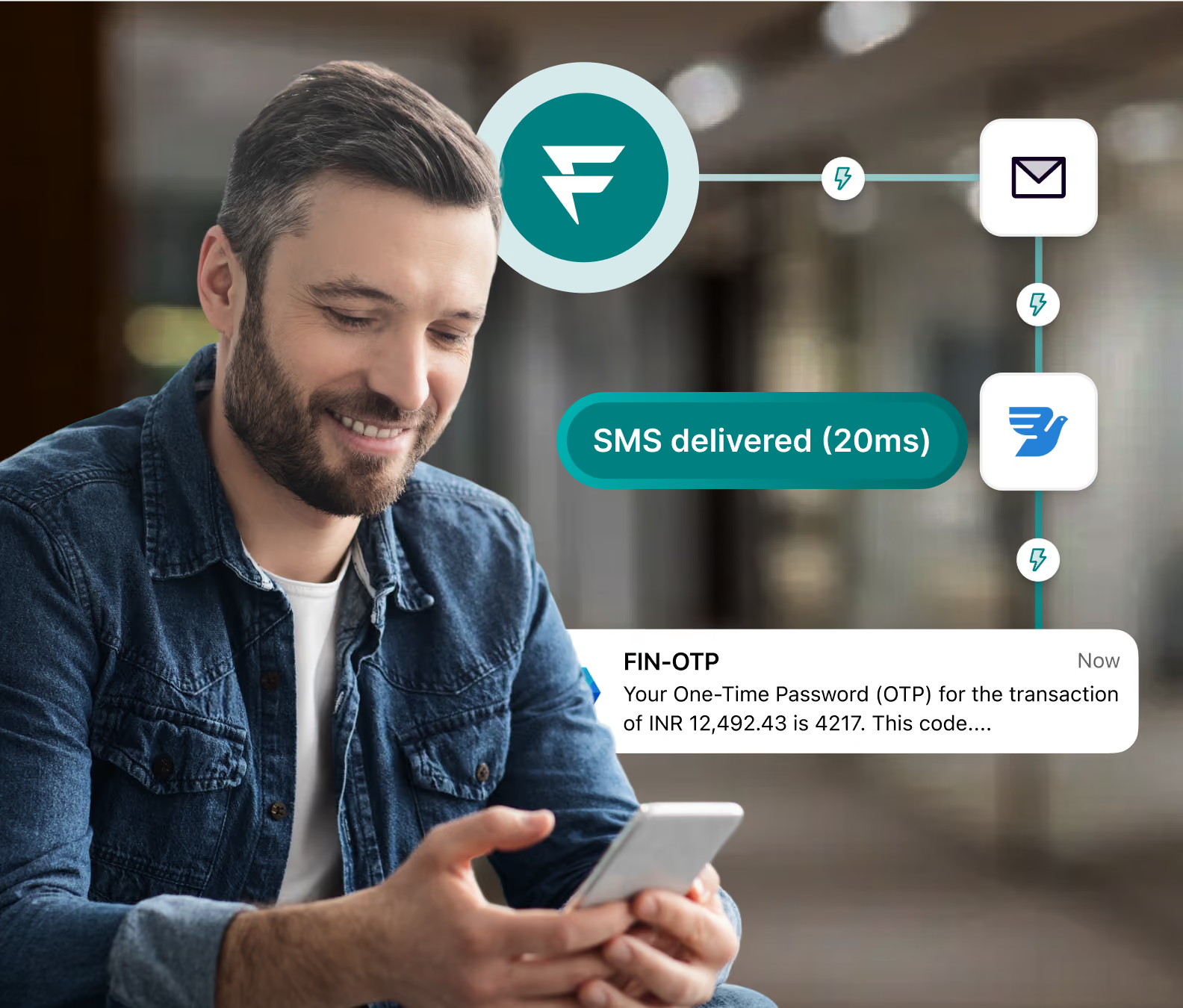
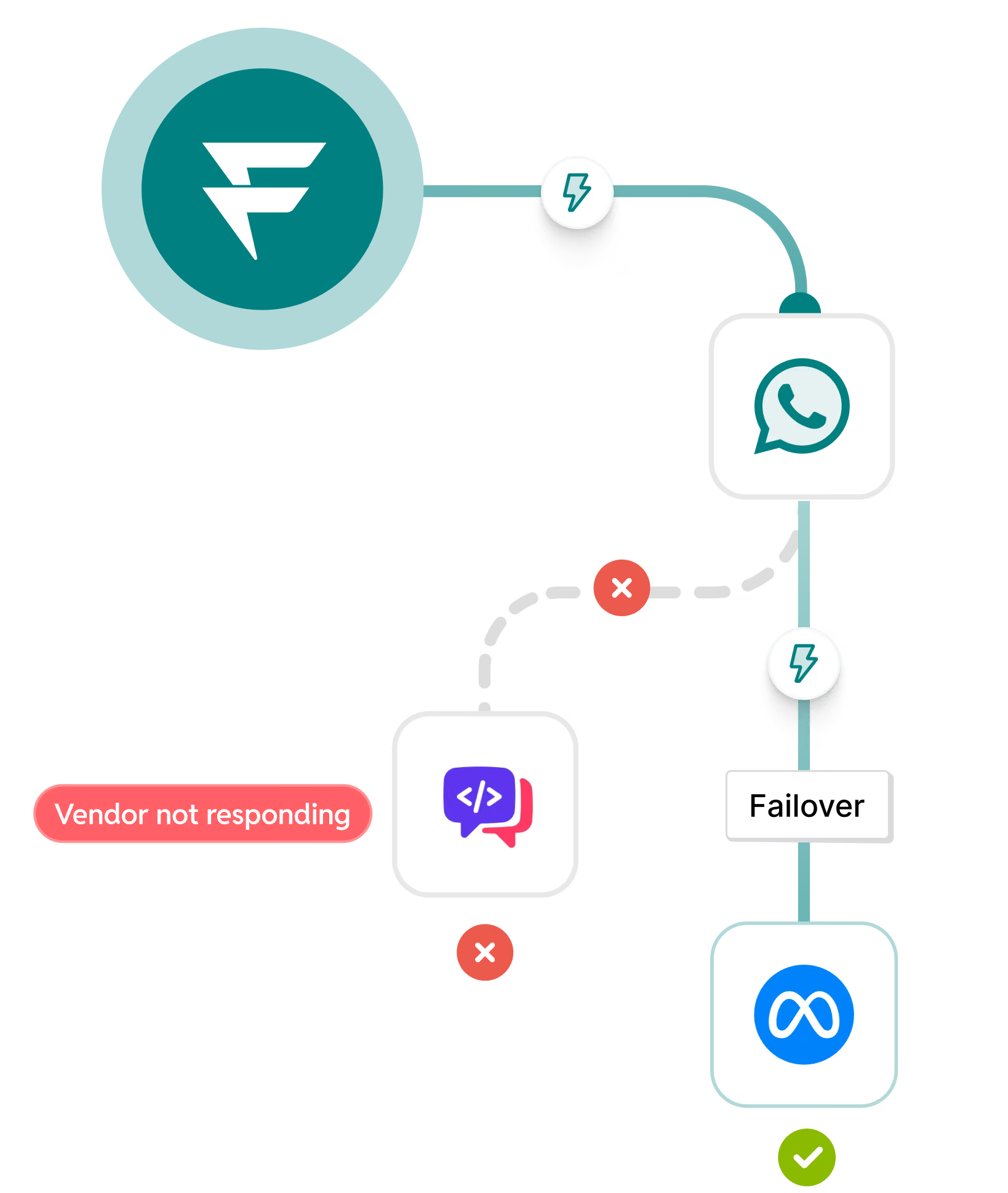
At scale, vendors throttle and failover is manual. Fyno assigns message priority, reroutes in milliseconds, and delivers at 80K TPS.

.webp)




.svg)

.svg)
.svg)


.svg)

.webp)

.svg)


Process every message in real time, at any volume
HIGH TPS, LOW LATENCY
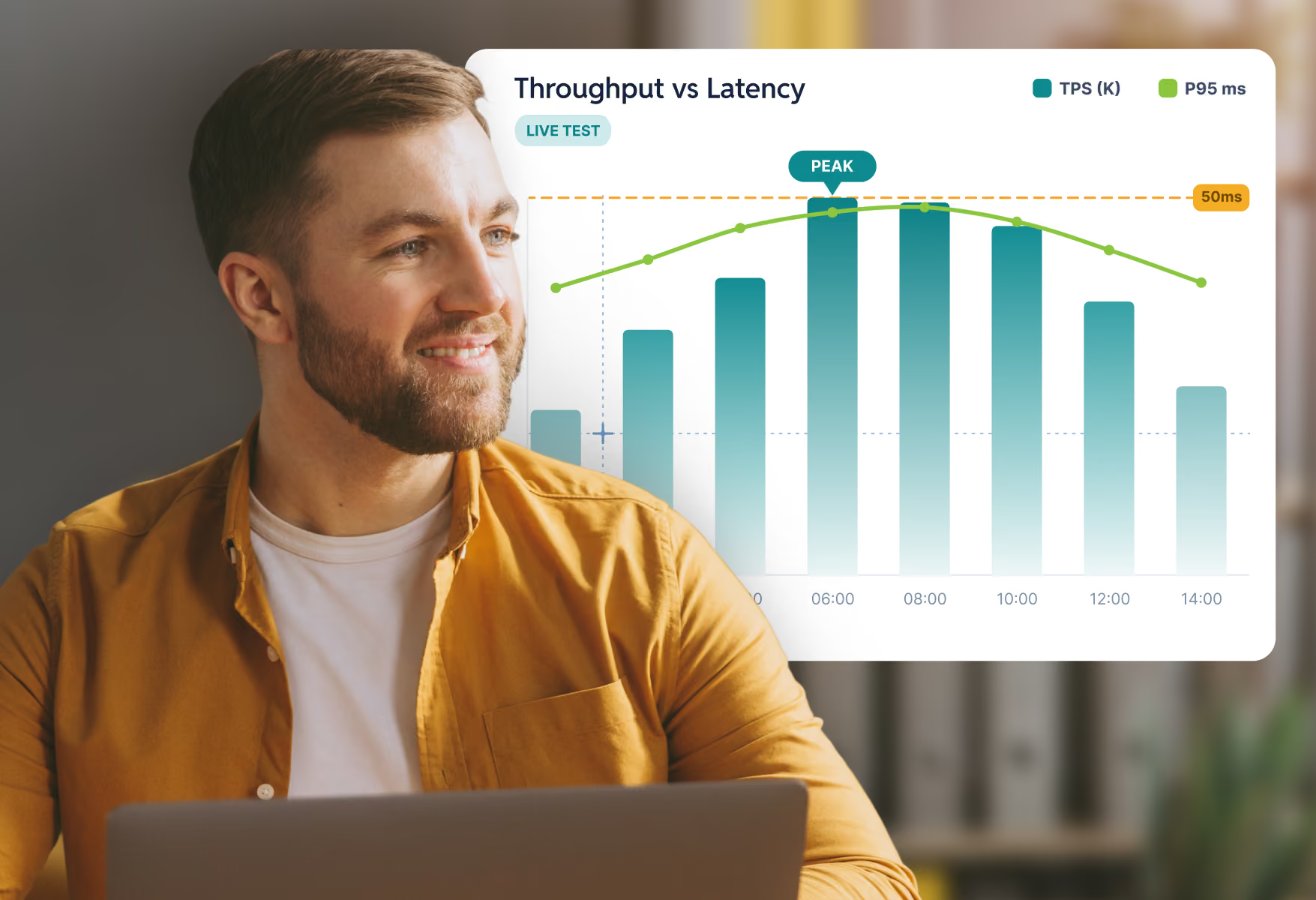
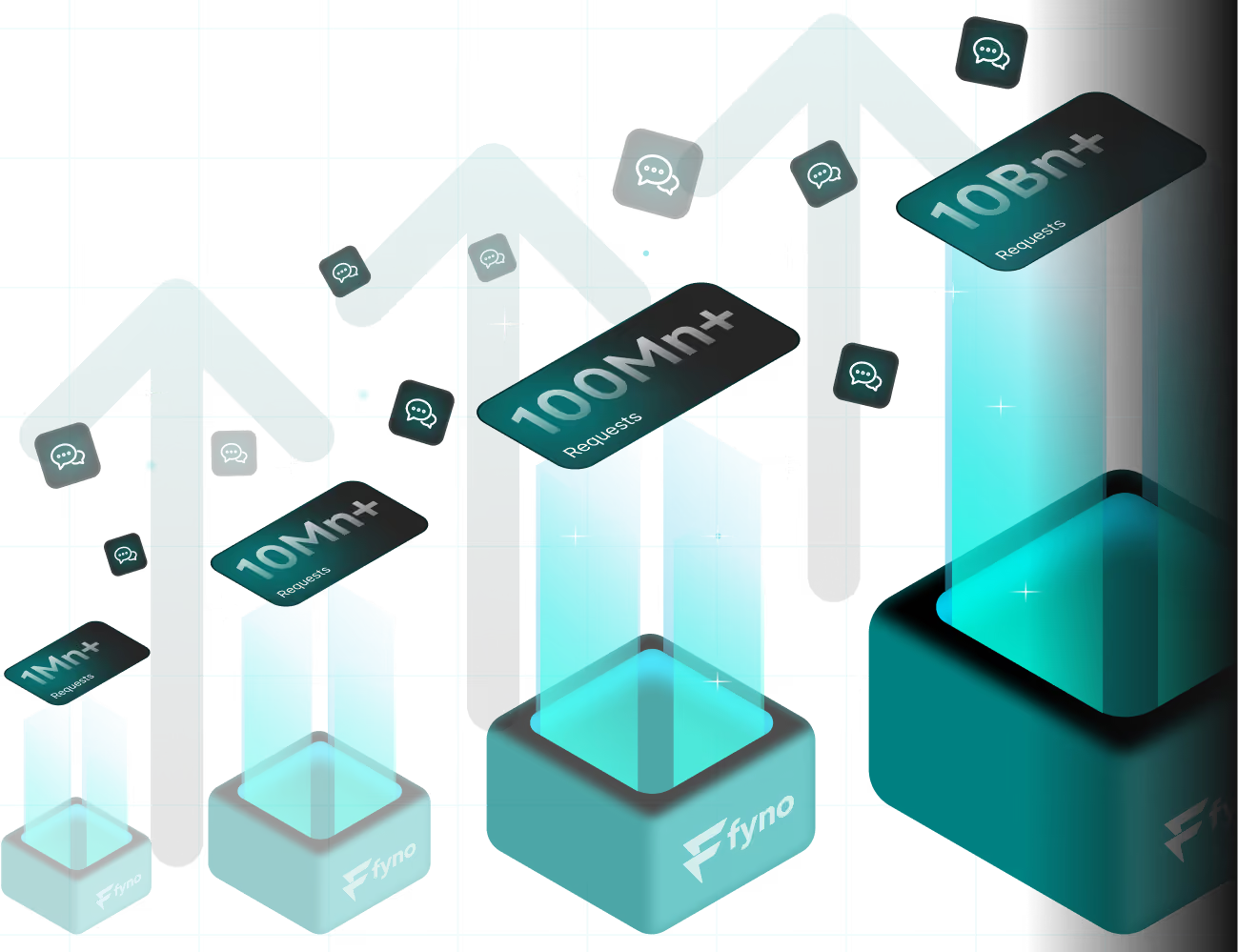
P95 processing under 50ms. Stress-tested at peak volumes across large banks and NBFCs.
MESSAGE PRIORITY QUEUES
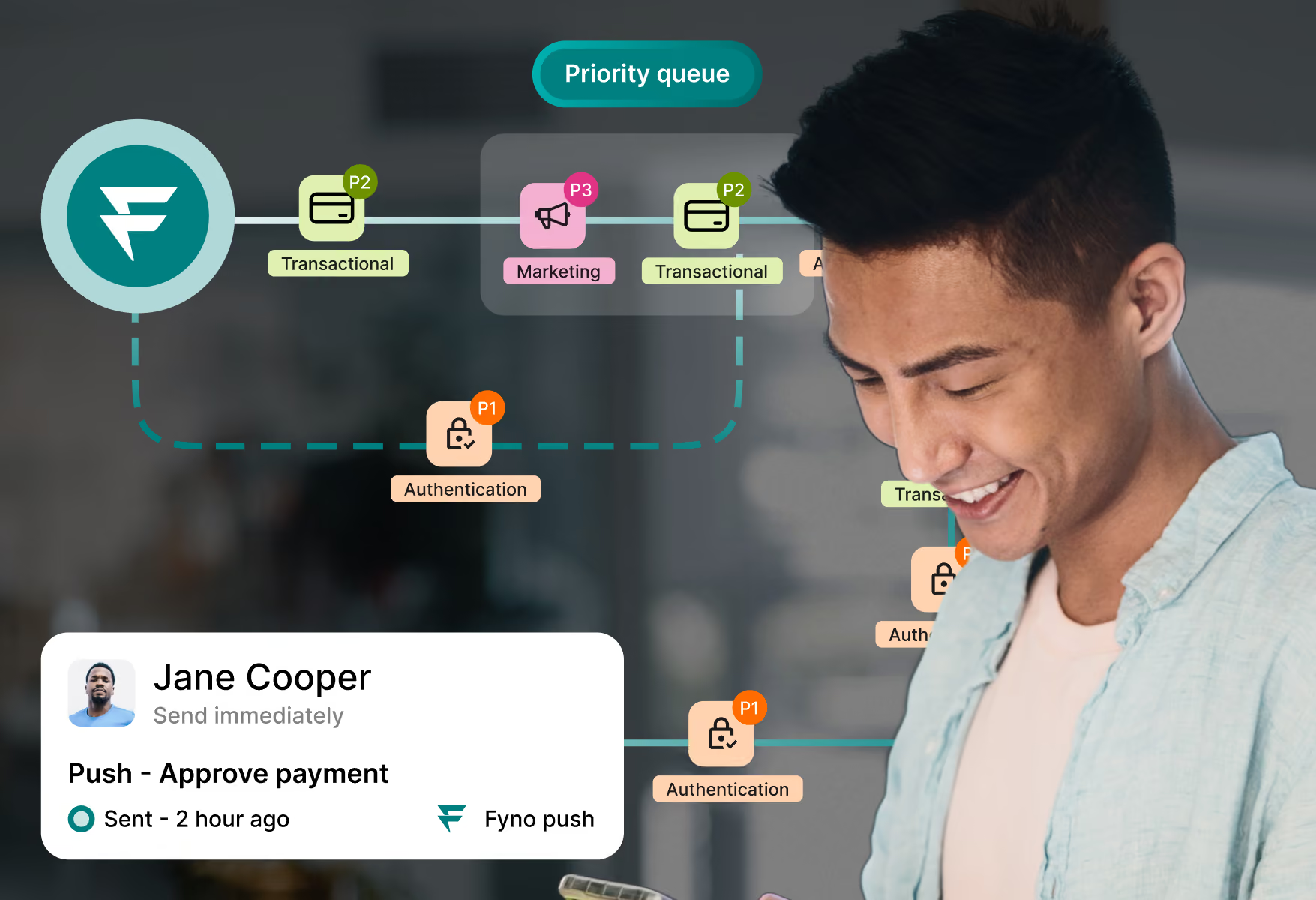
Separate queues for OTP, transactional, and marketing. No message type delays another.
EVENT-DRIVEN TRIGGERS
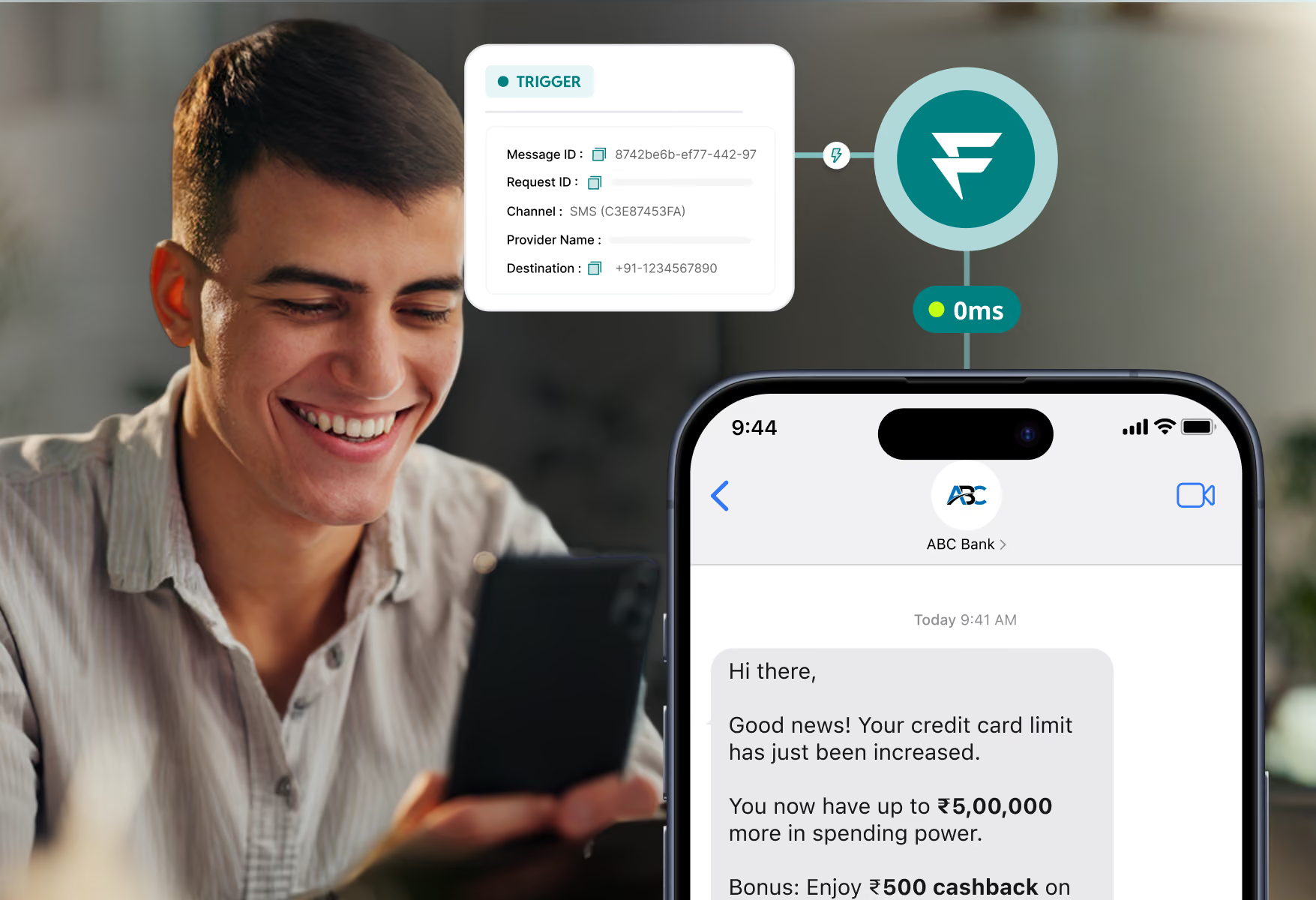
Payment, login, fraud alert. Messages send the moment it happens. No delay.
Built to stay fast when everything else slows down
AUTO-FAILOVER ON DELAY
Vendor slow to respond? Fyno switches before the timeout. Delivery never waits.
AUTOMATIC VOLUME SCALING
Fyno scales instances during traffic spikes. No capacity planning needed.
REAL-TIME CALLBACKS
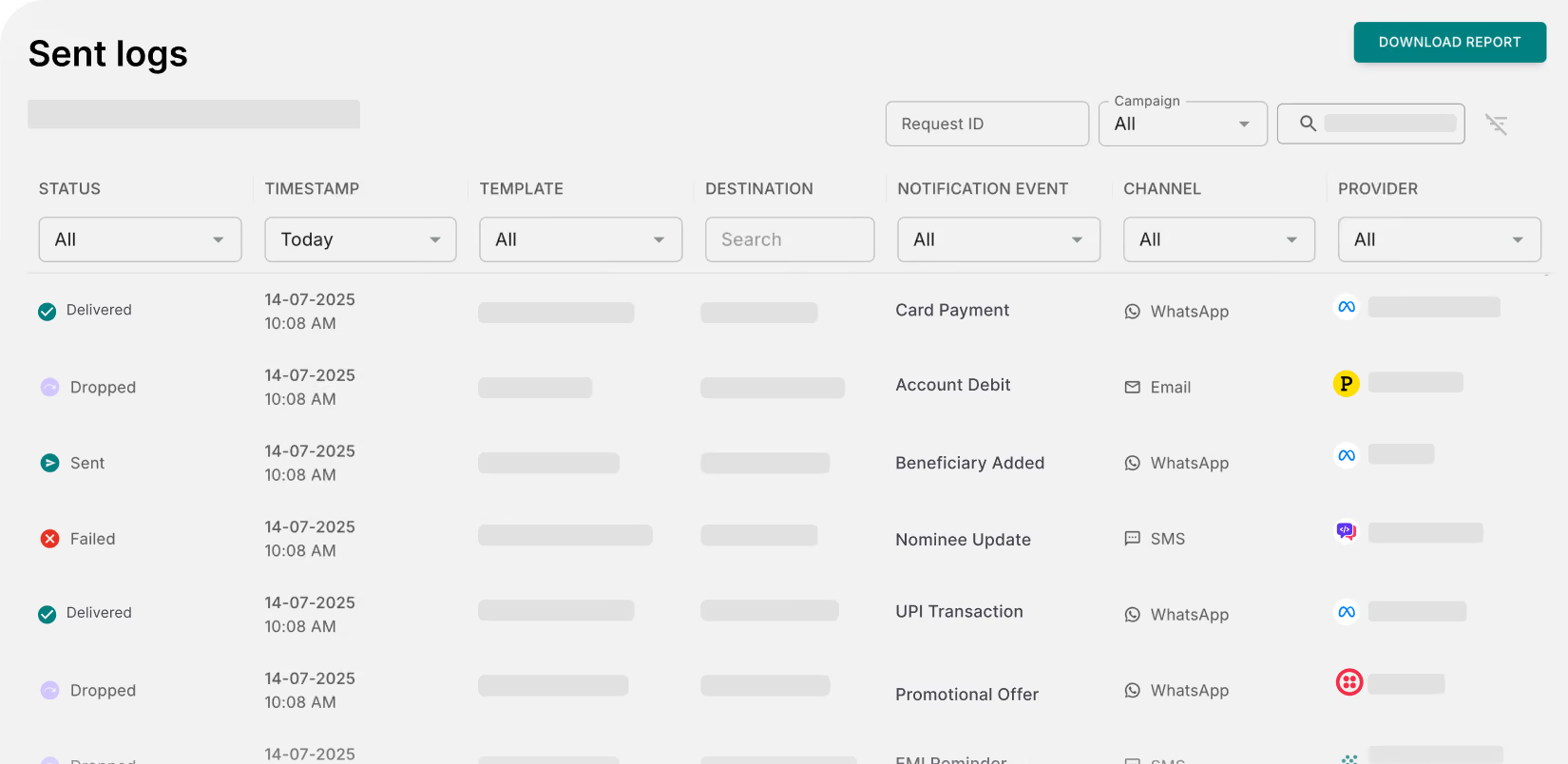
Status callbacks arrive in real time, not batched. Every send is tracked to delivery.
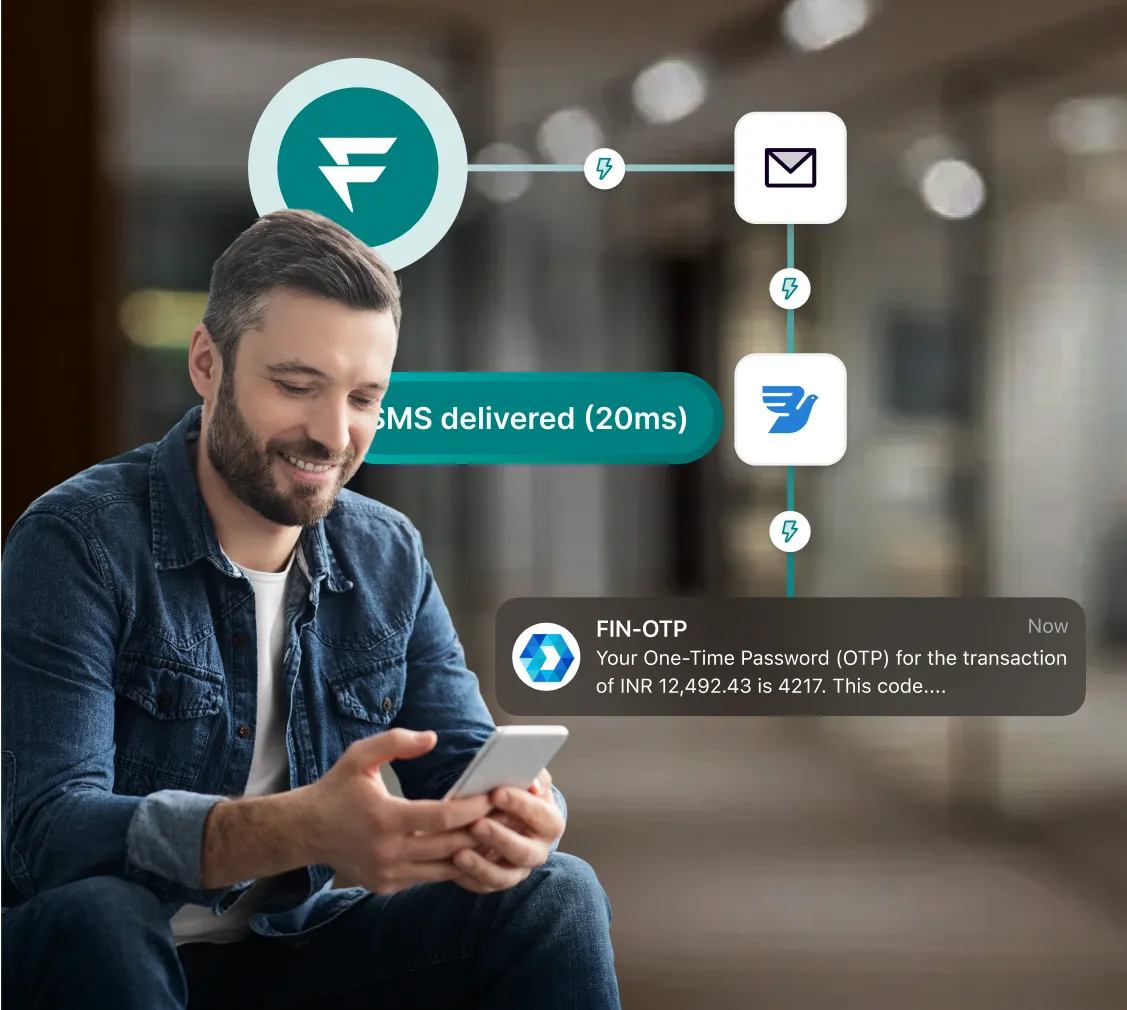
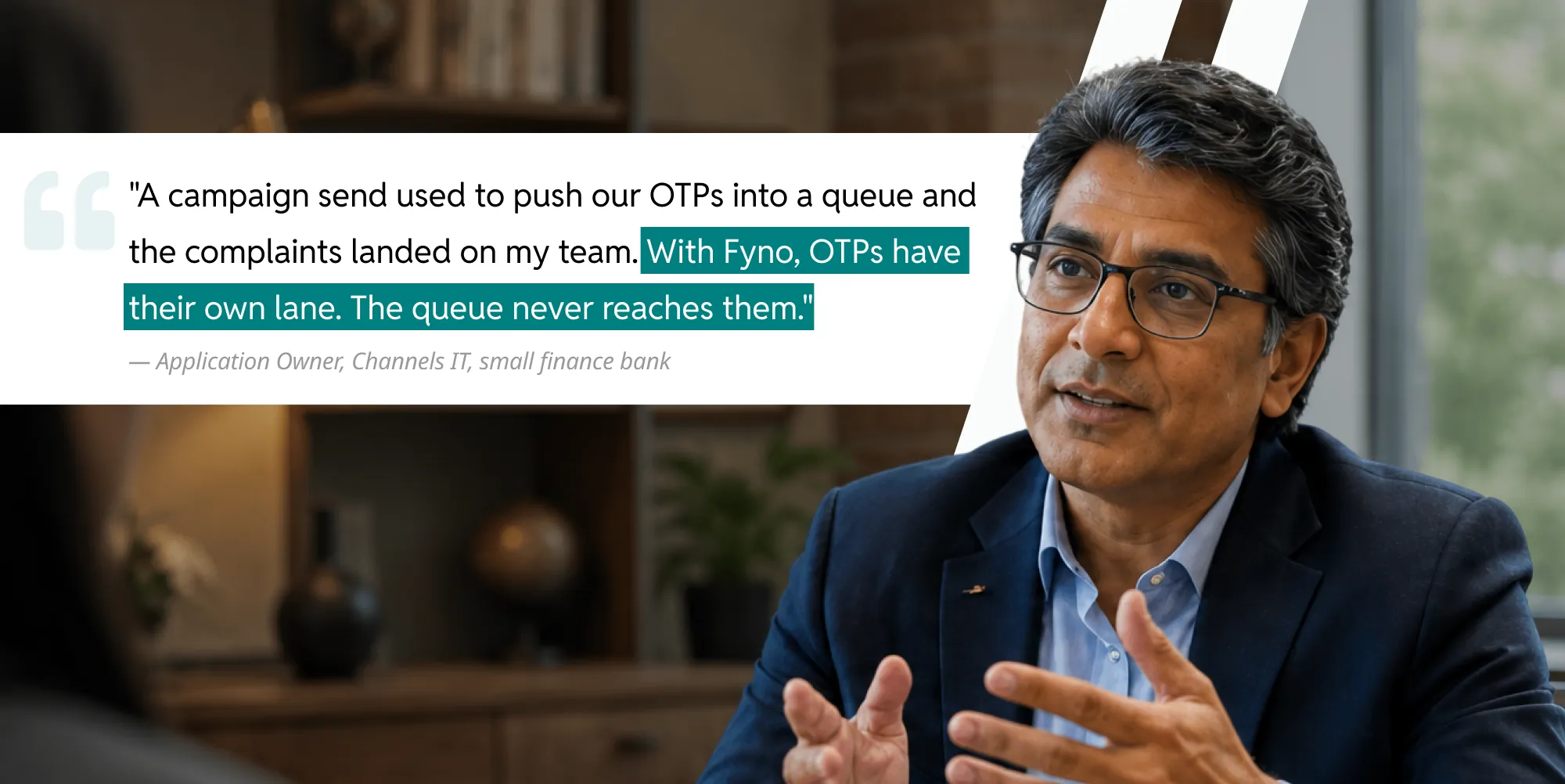
OTP and transaction alert delays during peak hours happen for three reasons. First, the bank's messaging infrastructure uses a single queue where OTPs, transaction alerts, and marketing messages compete for the same processing capacity. During a campaign blast, OTPs wait behind thousands of promotional messages. Second, the CPaaS vendor hits its rate limit and starts rejecting or queuing messages without notifying the bank. Third, the bank's infrastructure does not auto-scale, so throughput capacity is fixed at what was provisioned. Fyno addresses each of these. Priority queue management gives OTPs and fraud alerts their own processing lane, separate from transactional and marketing messages. Rate limit management across vendors means Fyno reroutes to an available vendor when one is at capacity. Auto-scaling adjusts processing instances during traffic spikes without manual intervention. The result: OTPs process in under 50ms even when the system is handling 80,000 messages per second.
80,000 transactions per second means Fyno can process 80,000 individual message triggers in one second. For context, a large bank sending 10 million OTPs per day averages roughly 115 messages per second across the day. But banking traffic is not evenly distributed. During salary day, Diwali, or a flash sale, traffic can spike to 10 to 50 times the daily average within minutes. 80,000 TPS means Fyno handles those spikes without queuing, rejecting, or slowing down. This capacity was stress-tested with a large NBFC under simulated peak conditions, with P95 latency holding under 50ms throughout the test. For most banks, the question is not whether they need 80K TPS today, but whether their infrastructure can absorb the next unexpected surge without engineering intervention.
Fyno maintains separate processing queues for each message priority level: critical (OTPs, fraud alerts), transactional (payment confirmations, account updates), and marketing (campaigns, promotions). Each queue has its own processing capacity and does not share resources with other queues. When a marketing campaign sends 500,000 messages, the critical queue continues processing OTPs at the same speed it would if no campaign were running. There is no bleed between queues. Priority is enforced at the infrastructure level, not as a software flag that can be overridden under load. This is structurally different from CPaaS vendors that process all messages through a single pipeline and apply priority as a best-effort setting.
Every CPaaS vendor imposes rate limits. When a bank's traffic exceeds those limits, the vendor either queues the excess (adding latency) or rejects it (causing failures). Most banks discover this during the surge, not before it. Fyno tracks rate limits across all connected vendors in real time. When one vendor approaches its limit, Fyno routes the next batch of messages to another vendor that has capacity. If all vendors on a channel are at capacity, Fyno escalates to the next channel in the failover cascade. This happens automatically, without engineering intervention, and before the vendor starts rejecting messages. The bank sees uninterrupted delivery. The vendor limits are respected. No messages are lost.
Yes. Fyno's in-app notification SDK delivers messages to users inside your mobile or web application using a socket-based connection. This means the notification appears the instant it is sent, without waiting for a push notification service or a polling interval. For banks, this is relevant for real-time balance updates, transaction confirmations, and fraud alerts that the customer should see immediately when the app is open. In-app delivery also has zero messaging cost since it does not go through a CPaaS vendor. Fyno treats in-app as a first-class channel alongside SMS, WhatsApp, email, and push, so that it participates in the same routing and failover logic as every other channel.
Batch messaging collects messages over a period (minutes or hours) and sends them in a single dispatch. This works for marketing campaigns and non-urgent updates. Real-time messaging processes each message the moment it is triggered, with no batching delay. For banking, the distinction matters because certain message types cannot tolerate any delay: OTPs expire within 30 to 60 seconds, fraud alerts lose their value if they arrive minutes after the transaction, and payment confirmations create customer anxiety when delayed. Fyno processes real-time messages at the trigger level. The moment your system fires an API call or an event reaches Fyno's queue, the message enters processing immediately. There is no collection window, no batch cycle, and no scheduled dispatch. Each message is processed individually at the speed of the infrastructure, not at the speed of the batch.
Learn how teams streamline communication, manage templates, and scale faster with Fyno.
.svg)