FYNO FOR INSURANCE
Communication orchestration built for insurers
Fyno is the orchestration layer between your core systems, your CCM, and every channel vendor, with IRDAI-grade governance and full cost visibility.

.webp)
.svg)
.svg)


.svg)
.webp)

.svg)
.svg)


Every renewal should be completed. Every claim should reach.
What’s costing your insurance business today?

Your CCM stores, it doesn’t orchestrate
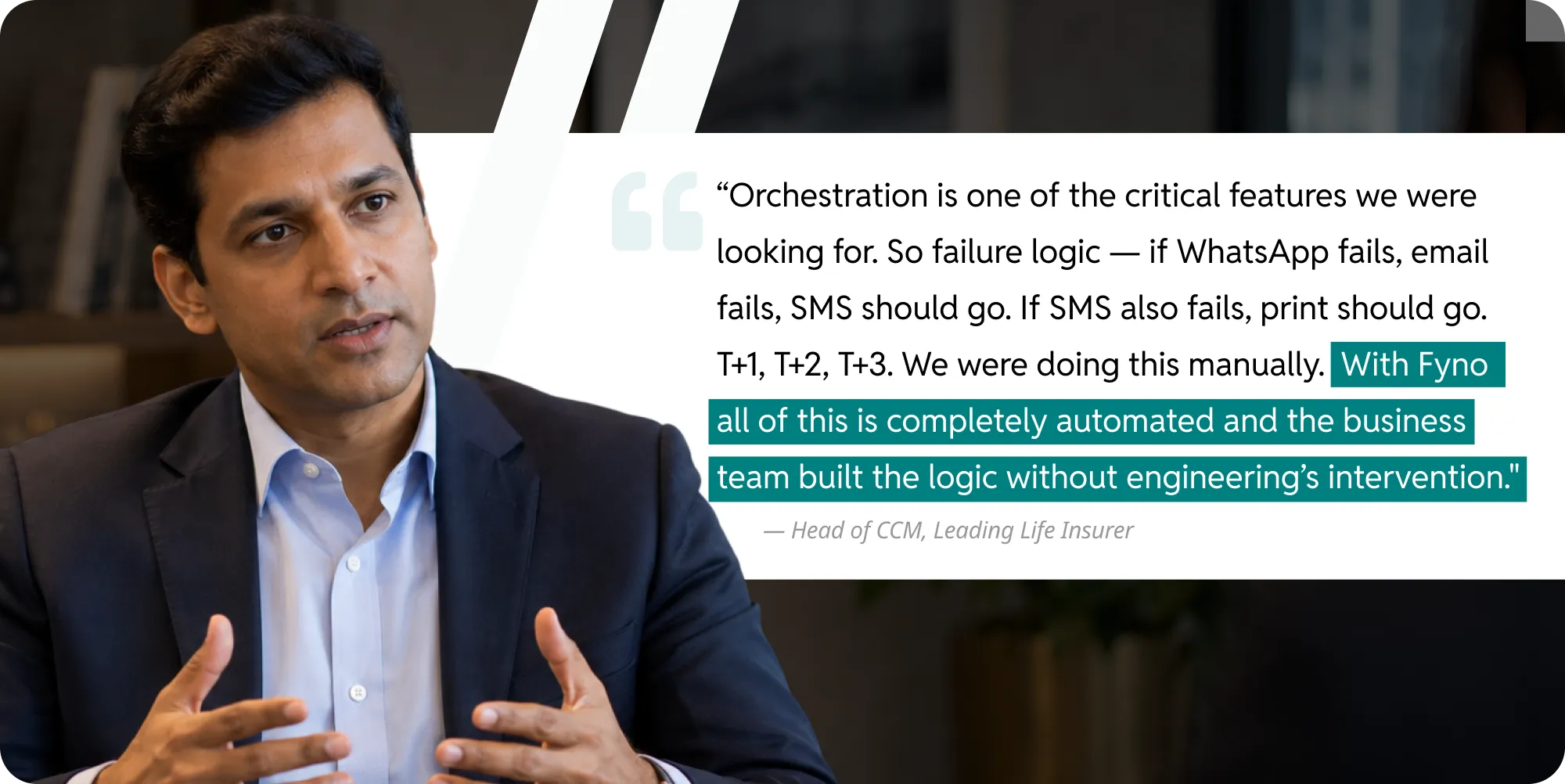
Your CCM can store and fire, but it cannot retry email, then SMS, then print on T+1, T+2, and T+3. Teams run those manually, and delivery stalls are at best around 92%.
Renewal spams the customer
At renewal a customer gets three SMS, fifteen WhatsApps, an email, and a call, because each department decides independently, with no frequency cap or DND.
Legacy CCM lock-in
Multi-year CCM contracts and millions of stored records make switching feel impossible, so you stay on a tool that cannot do real-time or omnichannel. You are bearing the cost, with no legacy outcomes.
Audit spans IRDAI, RBI, and DPDP
Bancassurance and DPDP mean you must prove who was contacted, when, and with what consent, but the evidence is scattered across vendors and email threads.

Here’s how Fyno helps insurers
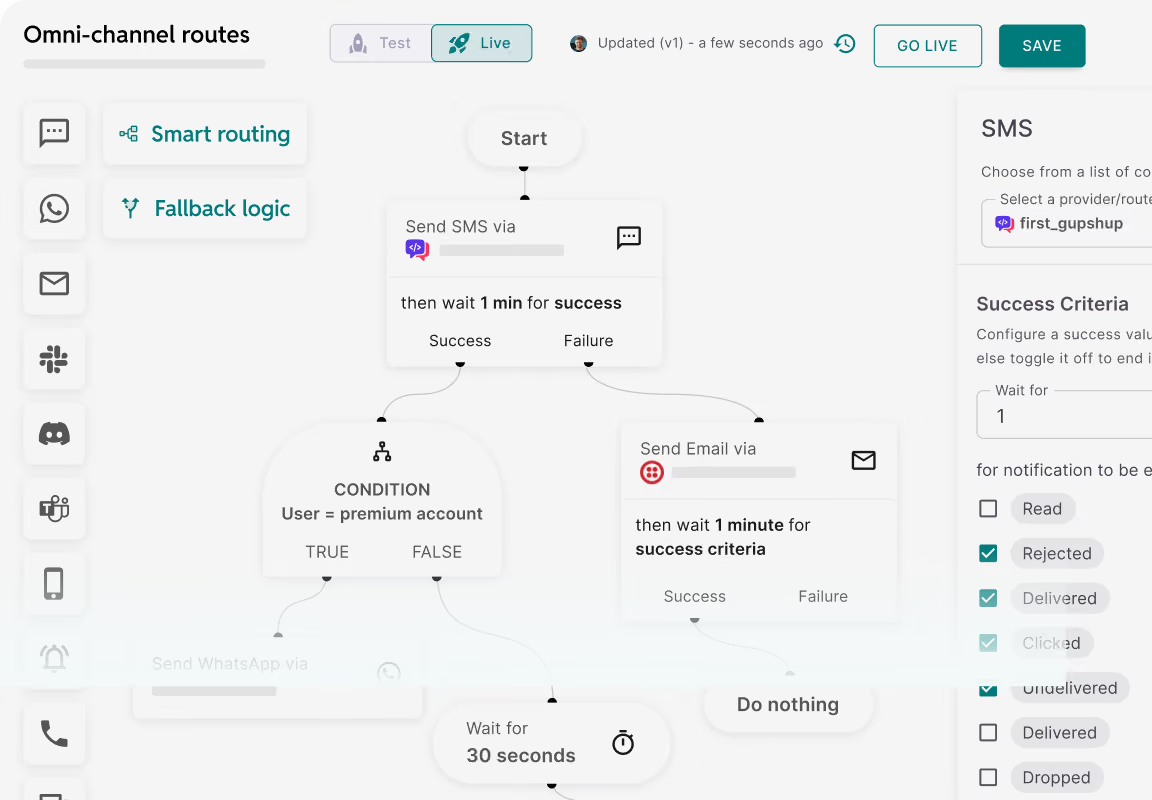
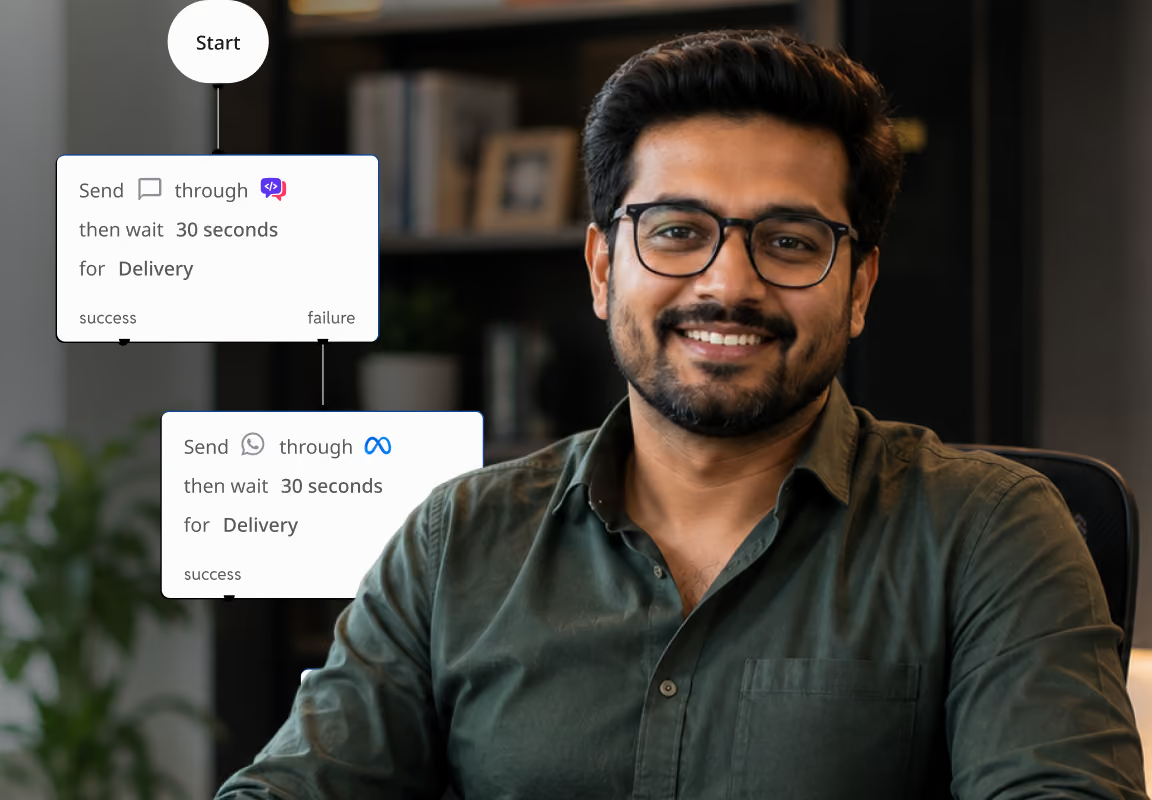
CCM orchestration with custom retries
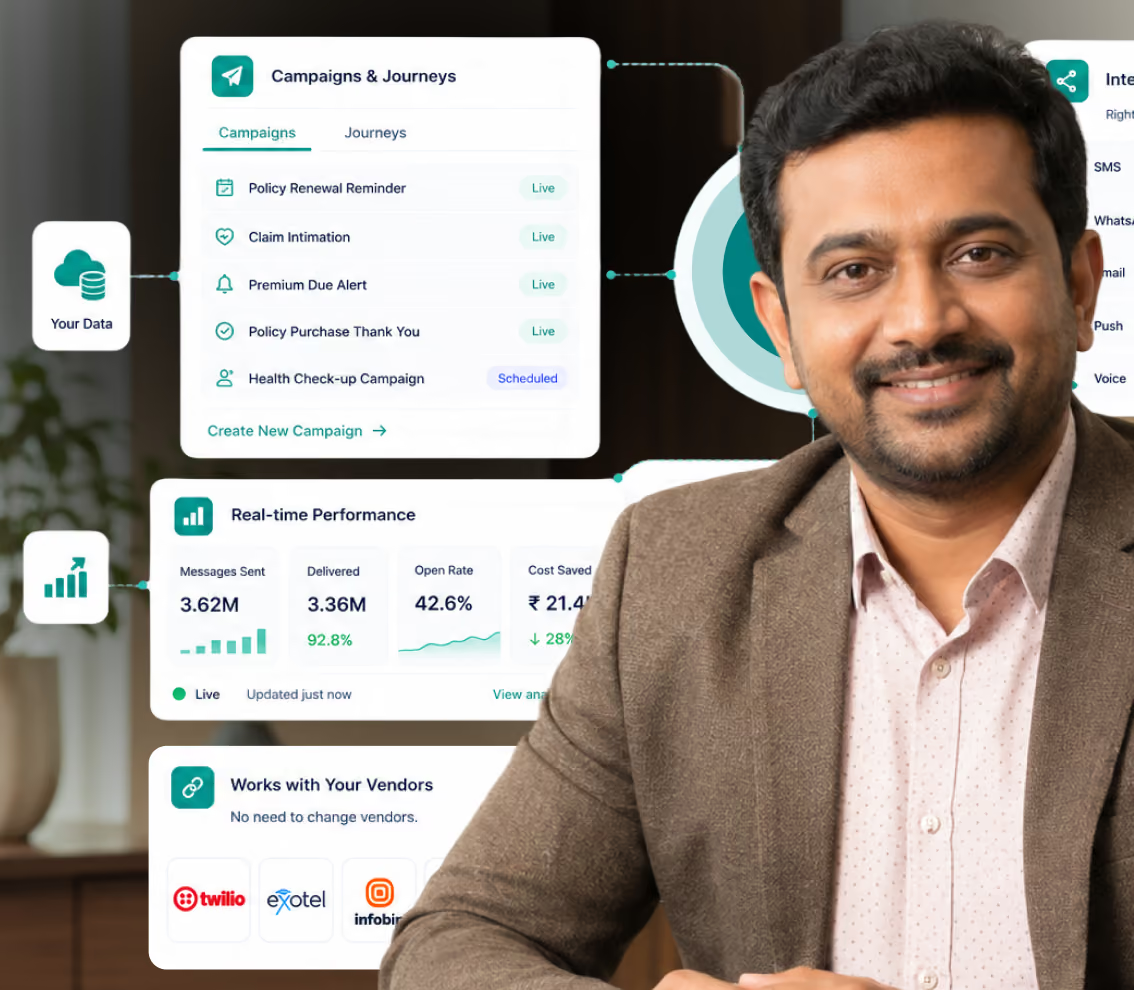
Fyno reries document delivery across email, SMS, and print and stores in a repository via API. All this is automated, lifting delivery from around 92% to more than 95%
Conditional failover across channels
When a channel fails, Fyno re-routes by rule: SMS to WhatsApp to in-app or email, so that every notification finds a working channel without a team watching delivery reports.
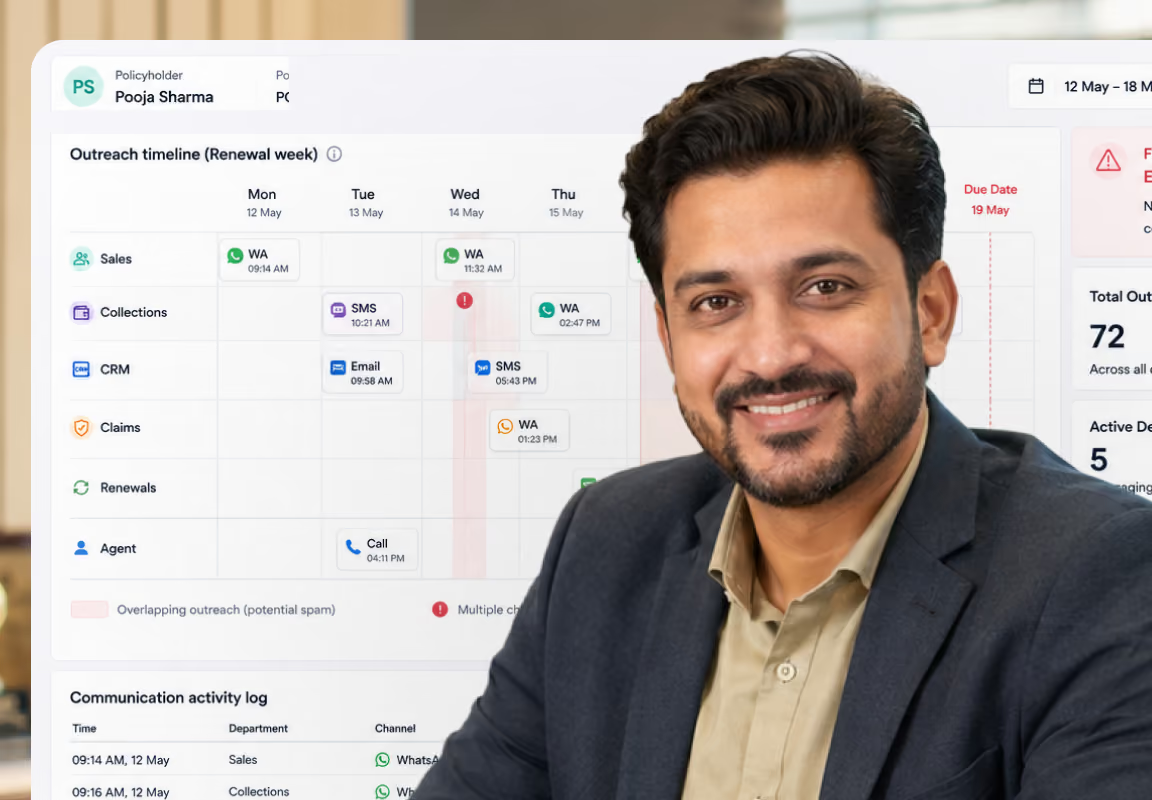
Stop the renewal-week pile-up
Workspace-level frequency caps in-line with regulations. Activity-based channel reach-out per policyholder. Audit log to show all channel outreach to avoid spamming customers.
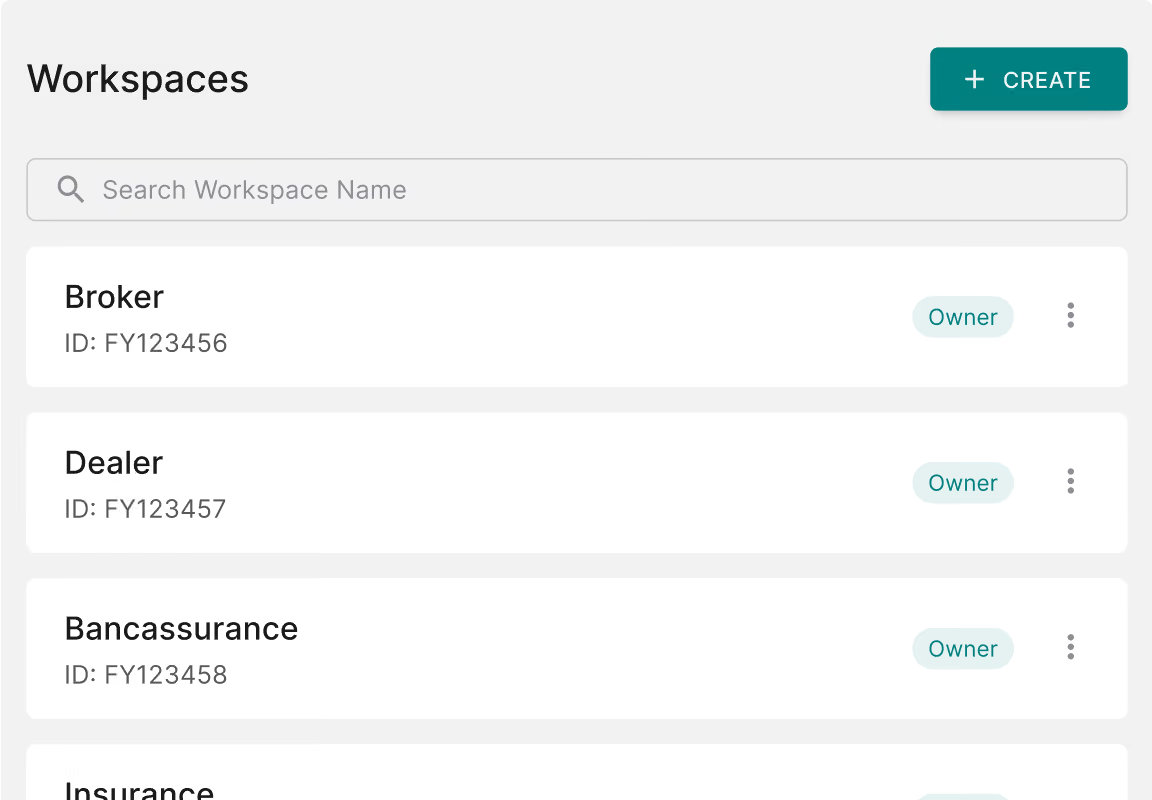
Multi-tenant workspaces for partners
Give each broker, dealer, or bancassurance partner their own workspace, with WhatsApp-as-a-service, wallet or prepaid billing, and isolated reporting.
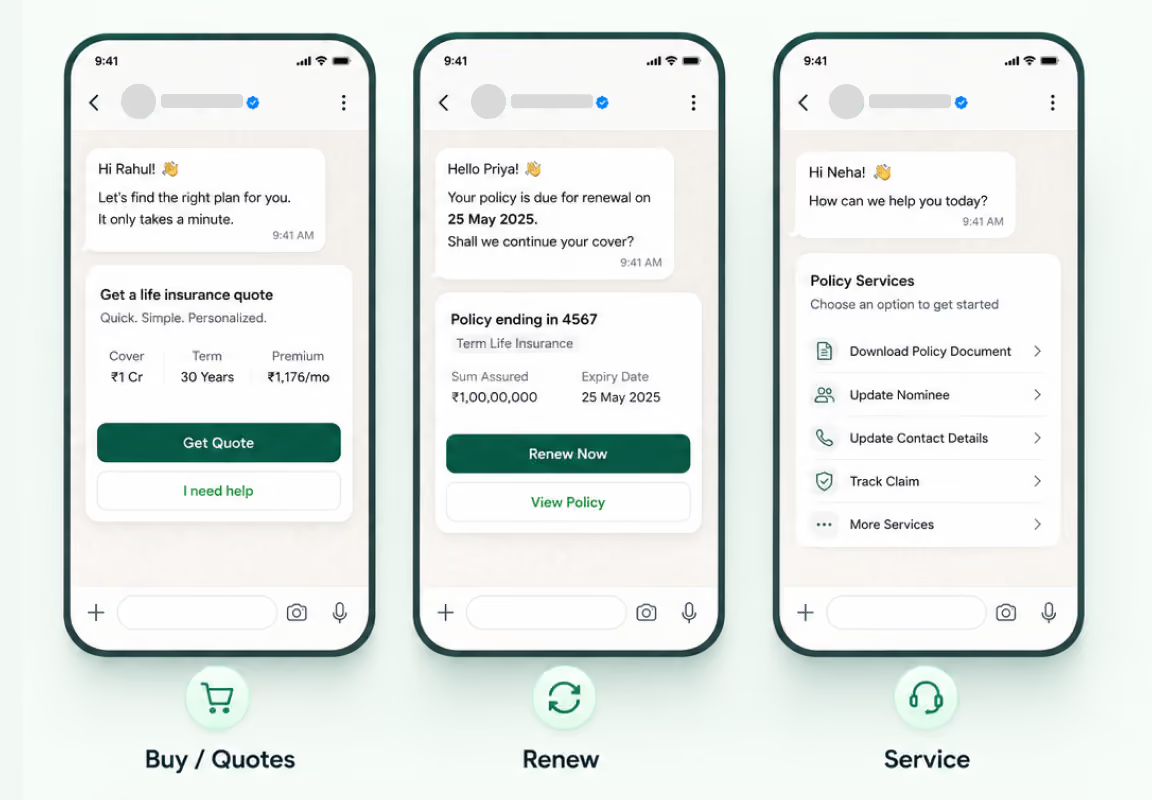
WhatsApp Flows for buy, renew, & service
Build DIY WhatsApp Flows for quotes, renewals, and policy servicing, integrated with your systems, so that policyholders get an app-like journey inside WhatsApp without you building it.
Switch vendors in seconds, not months
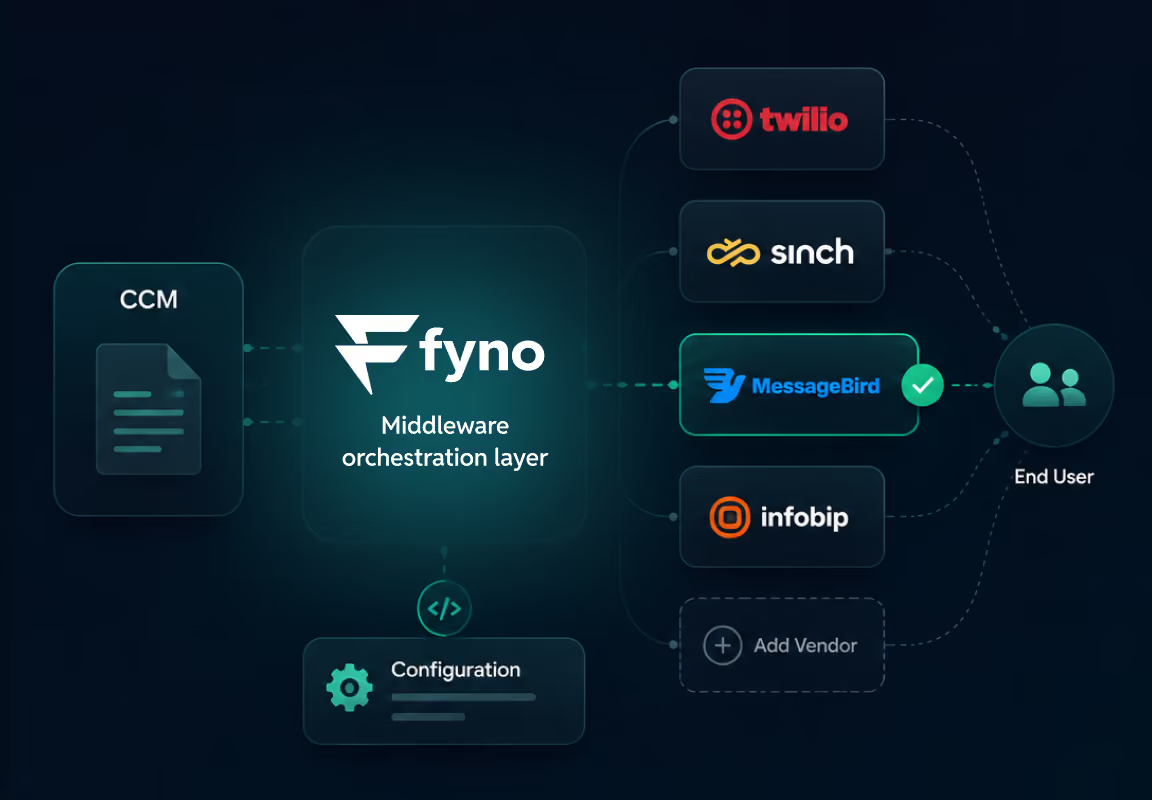
Add or swap a messaging vendor by configuration, in seconds. Fyno is a middleware orchestration layer, so you move without ripping out your CCM or impacting your communication to the end-user.
Template and DLT in one console
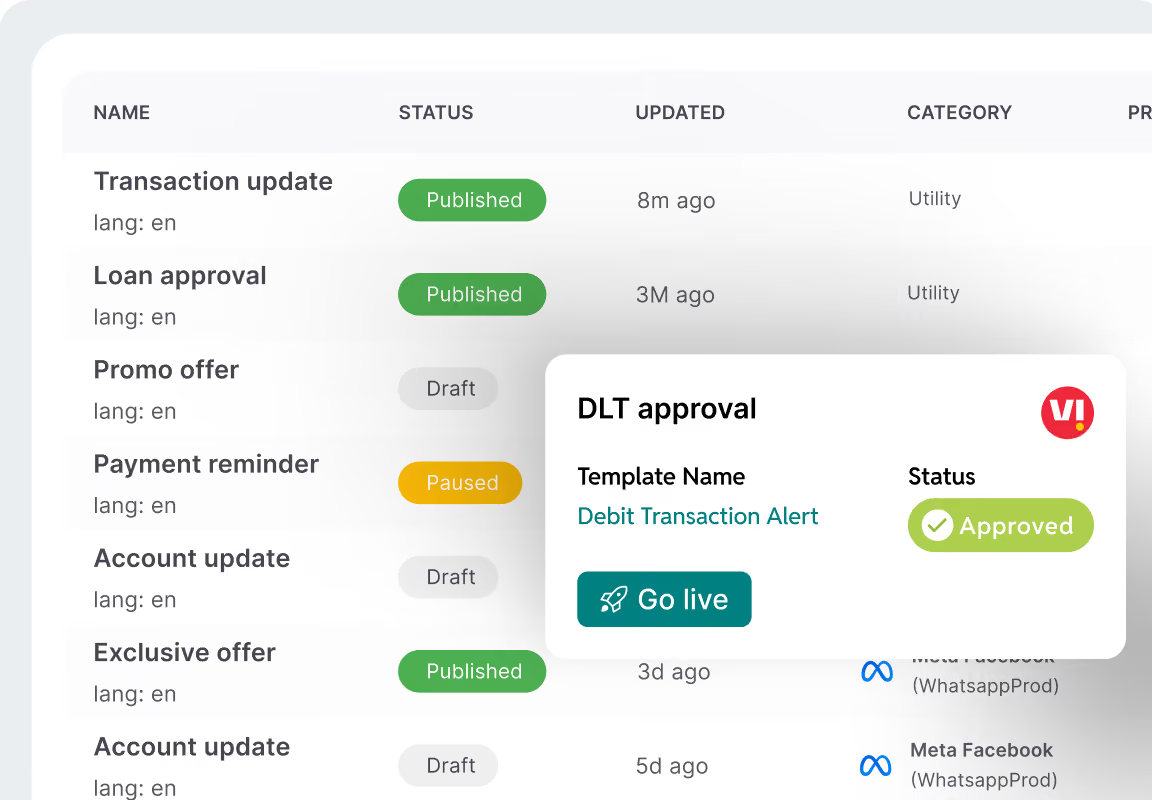
Create, approve, and version templates with maker-checker, and handle DLT approval inside the Fyno UI. Classify variables for marketing or transactional use, with no separate portals.
AI voice as a channel
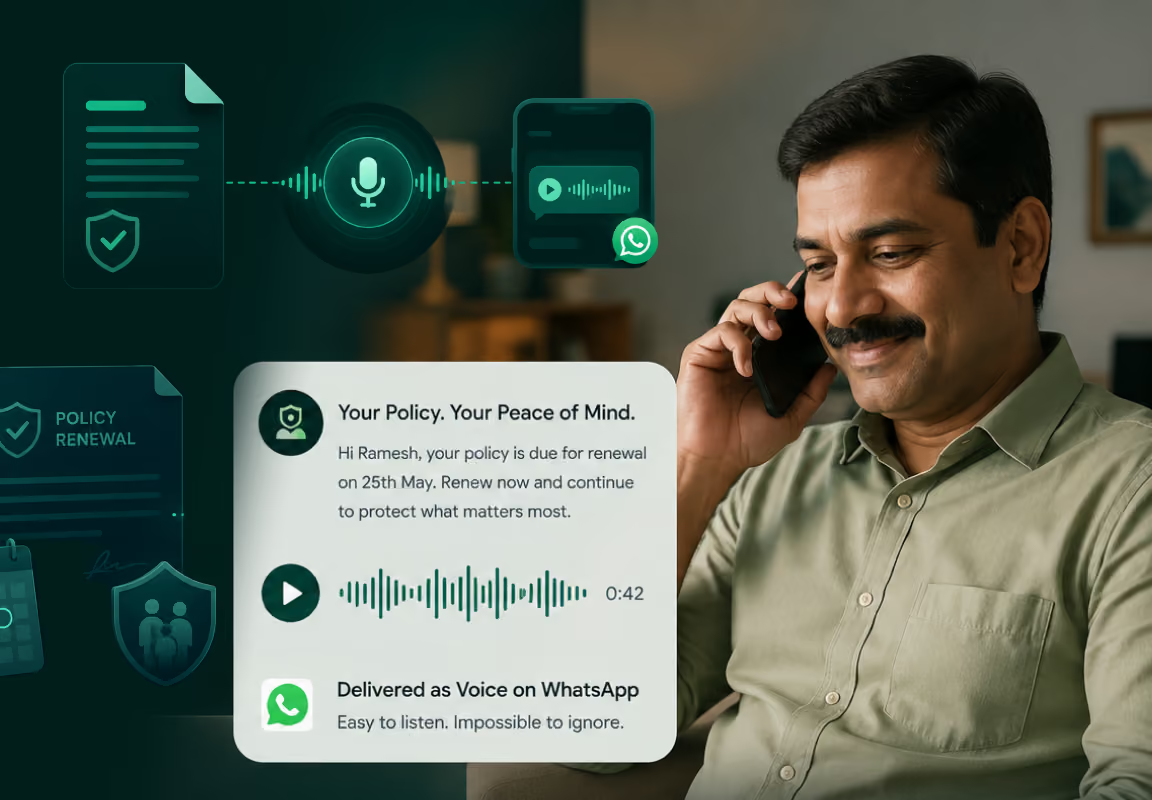
Convert a template to voice and deliver it, including over WhatsApp. Voice adds persistency and improves renewals for life insurance, in the same orchestration layer.
On-prem, residency, and masking controls
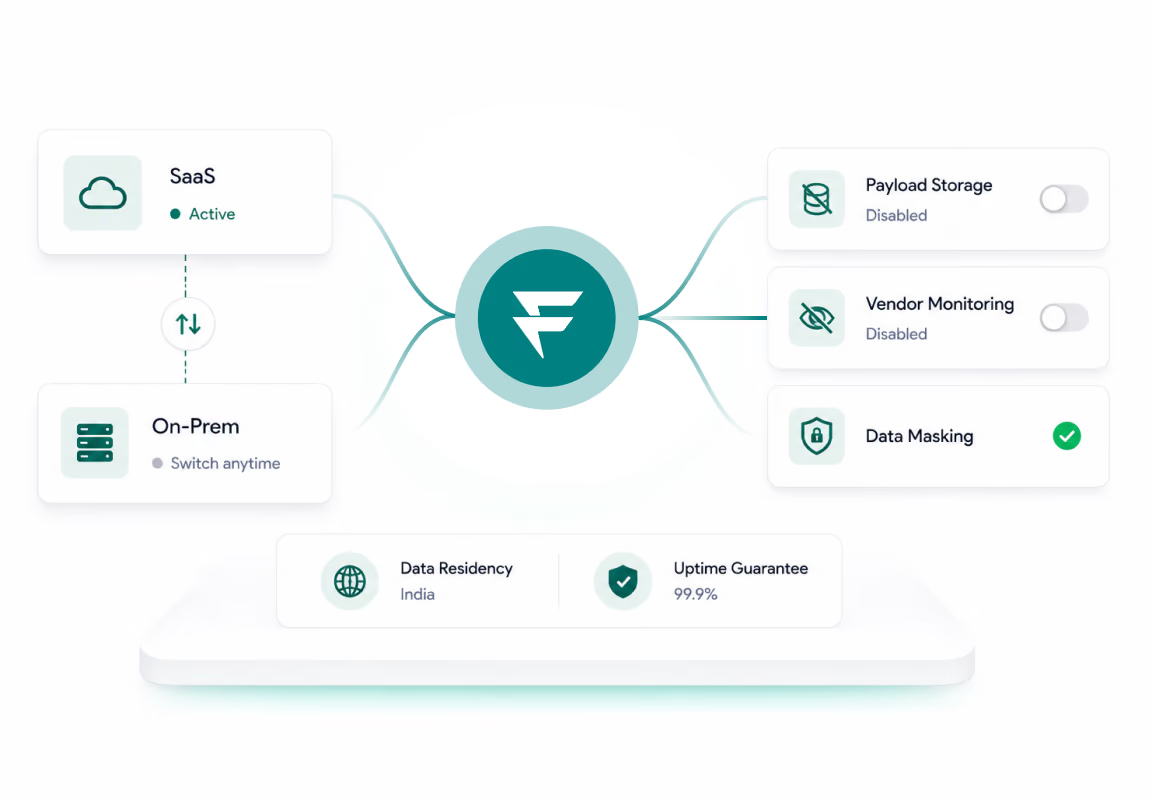
Start on SaaS and move on-prem once proven, with a pre-built switch to disable payload storage and vendor monitoring with uptime guarantees. Built information security on residency and masking.
CCM migration, no stack replacement
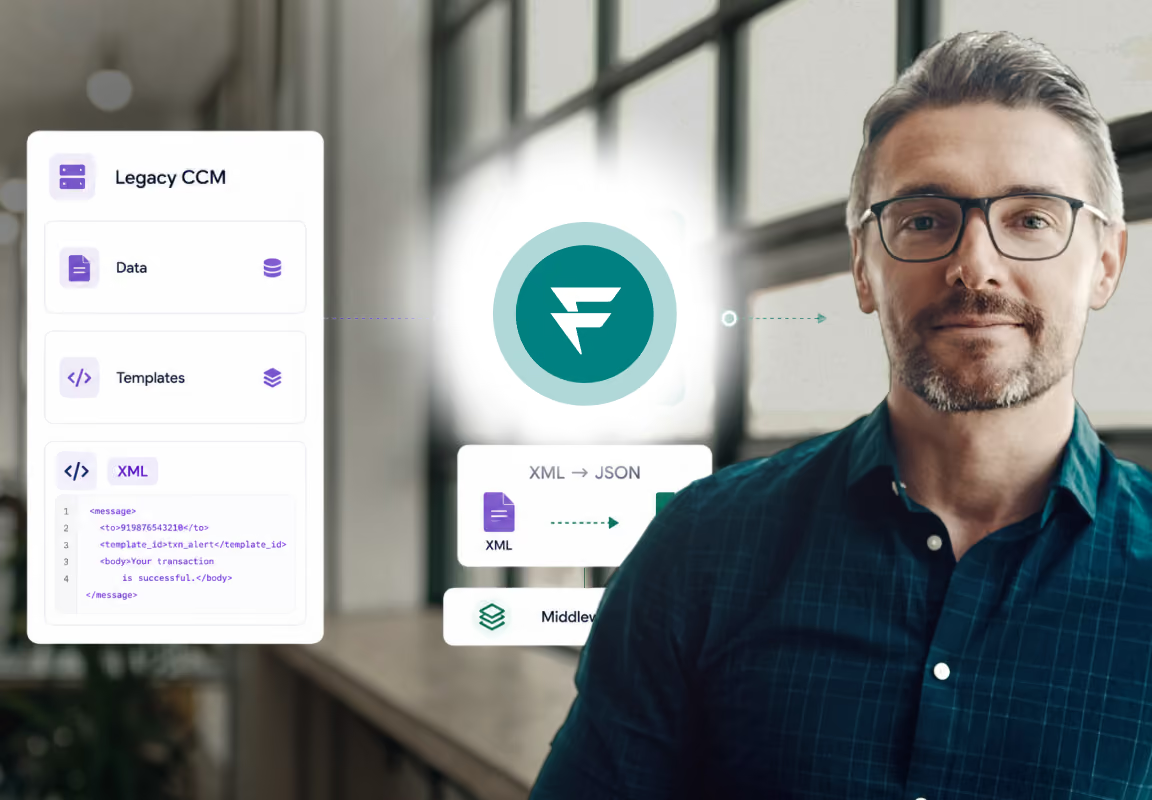
Migrate legacy CCM data into your new repository through an XML-to-JSON layer, and migrate thousands of templates. Fyno is middleware, sitting between your systems and vendors.
While you’re still here, check out some other features!
Securely automate communication operations (now with AI)
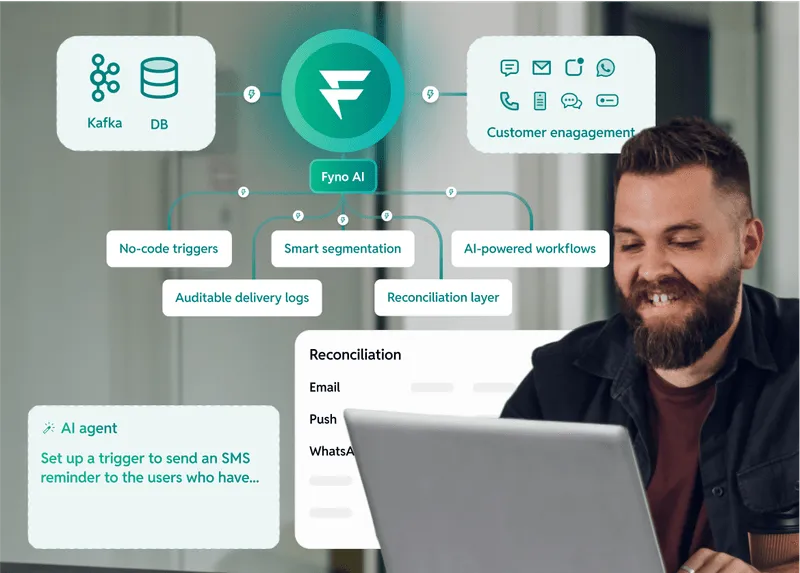
The most powerful notification center for your app
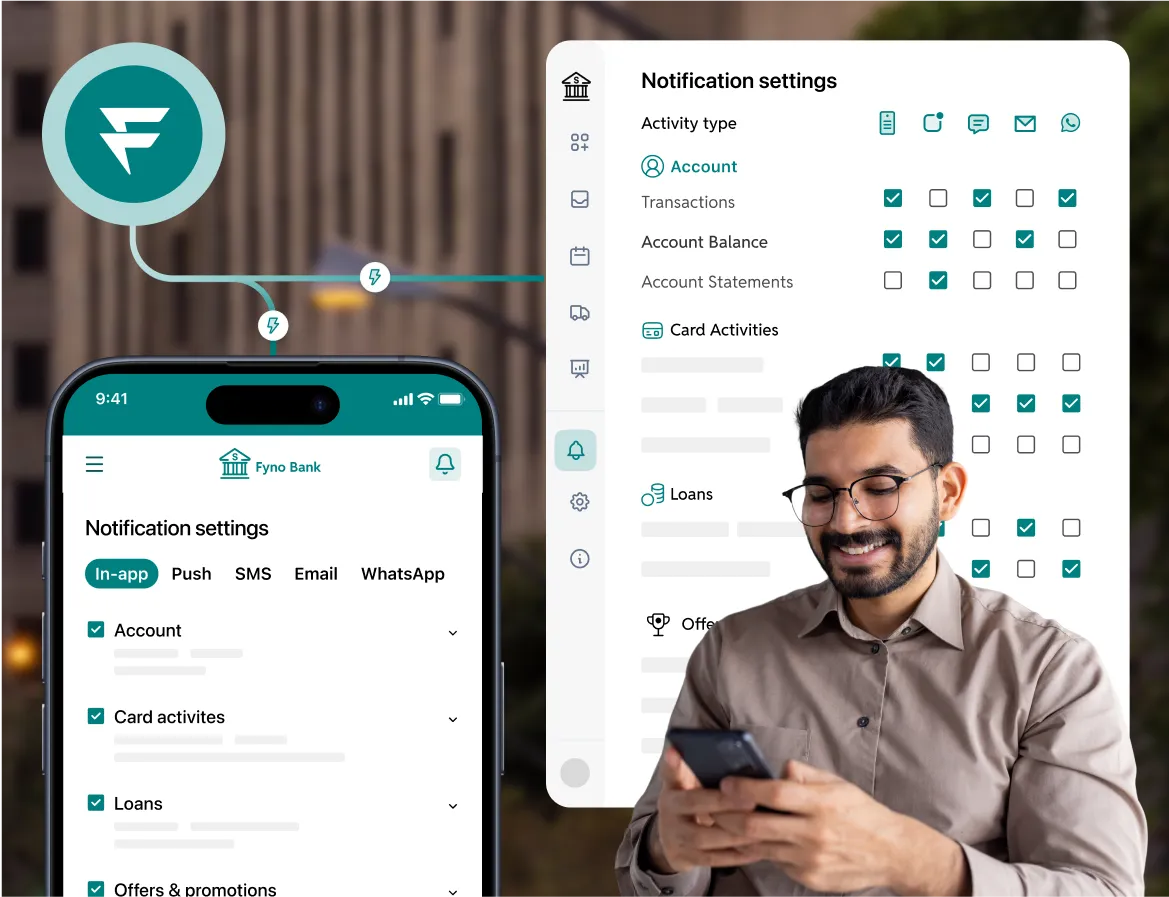
Build trust through intelligent preference management
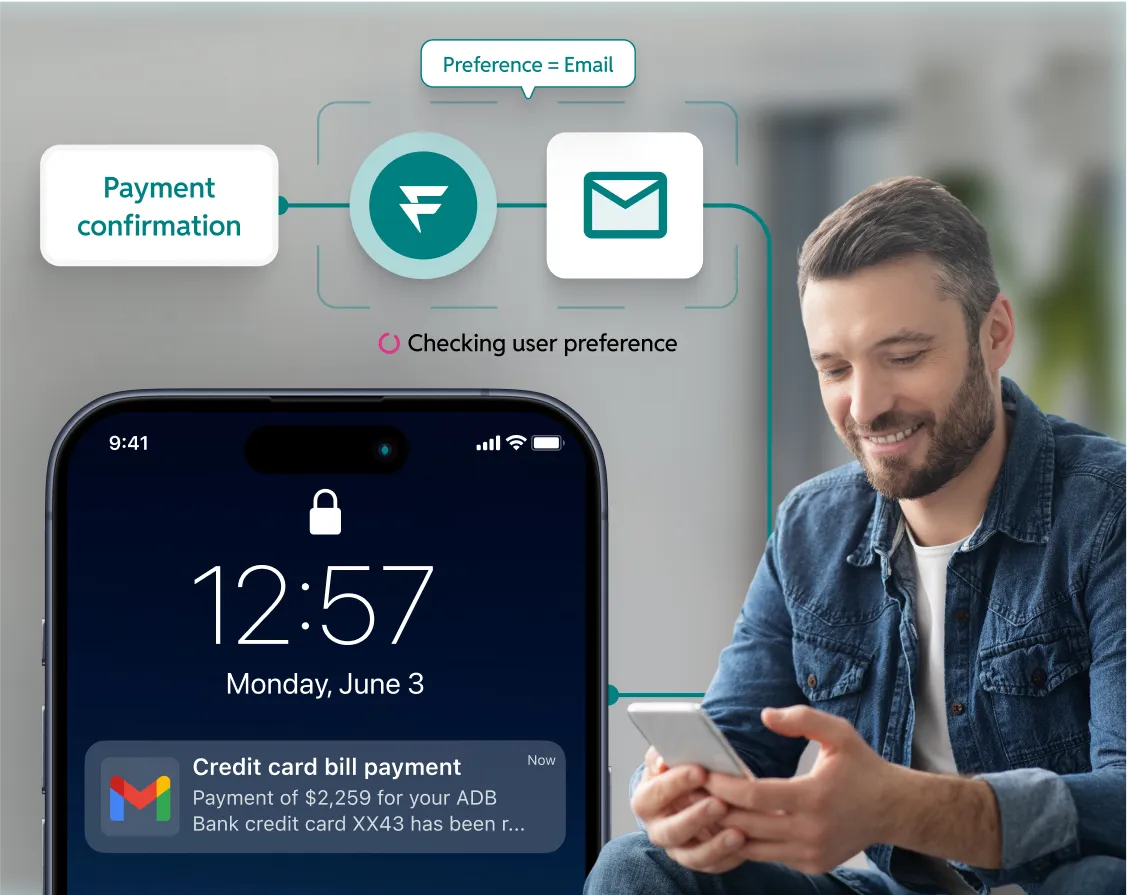
Cost is rarely the lead reason insurers move, but the savings are real. Each lever activates independently and they operate simultaneously, with no custom engineering build.
Frequently asked questions about insurance communications
Your CCM was built to compose and store documents, and it does that well. What it usually cannot do is orchestrate delivery: retry Email, then SMS, then Print on T+1, T+2, and T+3, fail over across channels in real time, and keep a single delivery and consent record. Fyno is a complementary orchestration layer that sits alongside your CCM, not a rip-and-replace. It adds retries, conditional failover, frequency capping, and a unified log, and it can store rendered HTML, TXT, and PDF back to your DMS or repository via API. You keep your CCM and your vendors; Fyno makes them deliver and prove delivery.
You define the fallback once: which channels, in which order, and on which day. Fyno attempts the first channel, and if delivery is not confirmed it retries on the next channel on T+1, then T+2, then T+3, across Email, SMS, WhatsApp, and Print. Each rendered output, HTML, TXT, or PDF, is stored to your DMS or communication repository through an API, with a timestamped delivery record. This replaces the manual retry process insurance teams run today and is what moves measured delivery from around 92% toward 95% and higher.
Yes. The pile-up happens because each department sends on its own with no shared rules. Fyno enforces frequency caps, for example a maximum of three non-regulatory communications a day, and DND once, centrally, so they apply across every team and product. Regulatory messages are exempt where required, and preference and channel rules are honoured at send time. The result is that a renewing customer no longer receives three SMS, fifteen WhatsApps, an email, and a call in the same week, which protects both experience and DPDP posture.
Adding or swapping a vendor is a configuration change measured in seconds, not a three to four month integration cycle. Because Fyno sits in front of your vendors as a vendor-neutral layer with pre-built integrations, the new provider is activated by configuration and traffic routes to it under your rules. This is the structural answer to legacy lock-in: you can move off or around a contract without re-integrating every system, and you can run vendors in parallel during a transition.
Yes, and for many insurers this is the starting point. Fyno can run as a migration layer alongside your current CCM, converting legacy records, for example millions of XML records, into the JSON your new repository expects, at production throughput. Templates, often several thousand, are migrated into one console with versioning and maker-checker. Because Fyno runs alongside the incumbent during the move, migration is incremental rather than a single high-risk cutover, which is what makes a multi-quarter CCM migration feasible.
Yes. Voice runs as a channel inside the same orchestration layer, and Fyno can convert a template to voice and deliver it, including over WhatsApp, which legacy systems generally cannot do. For life insurance, voice is the persistency and renewal workhorse, so having it in the same journeys, with the same routing, failover, and logging as your other channels, means a renewal sequence can move from SMS to WhatsApp to a voice call under one set of rules.
Yes. A common pattern is to start on SaaS and move on-prem once the deployment is proven, and Fyno supports that path. It includes a pre-built switch to disable payload storage, so sensitive content is not retained where policy forbids it, plus vendor monitoring with uptime guarantees. For CISO and InfoSec teams, this addresses data residency and masking directly, and on-prem deployment keeps customer data and logs inside your environment and inside India.
Yes. Every send produces a timestamped record linking the message to its template version, channel, vendor, delivery outcome, and consent status, and these logs can be forwarded to your own data lake in real time. Template governance with maker-checker and DLT sync keeps approvals controlled and recoverable. When an IRDAI, RBI bancassurance, or DPDP inquiry arrives, the answer is a single queryable record rather than a reconstruction across vendors and email threads.
Discover insights
Learn how teams streamline communication, manage templates, and scale faster with Fyno.


.svg)