Send DPDP-compliant messages across channels
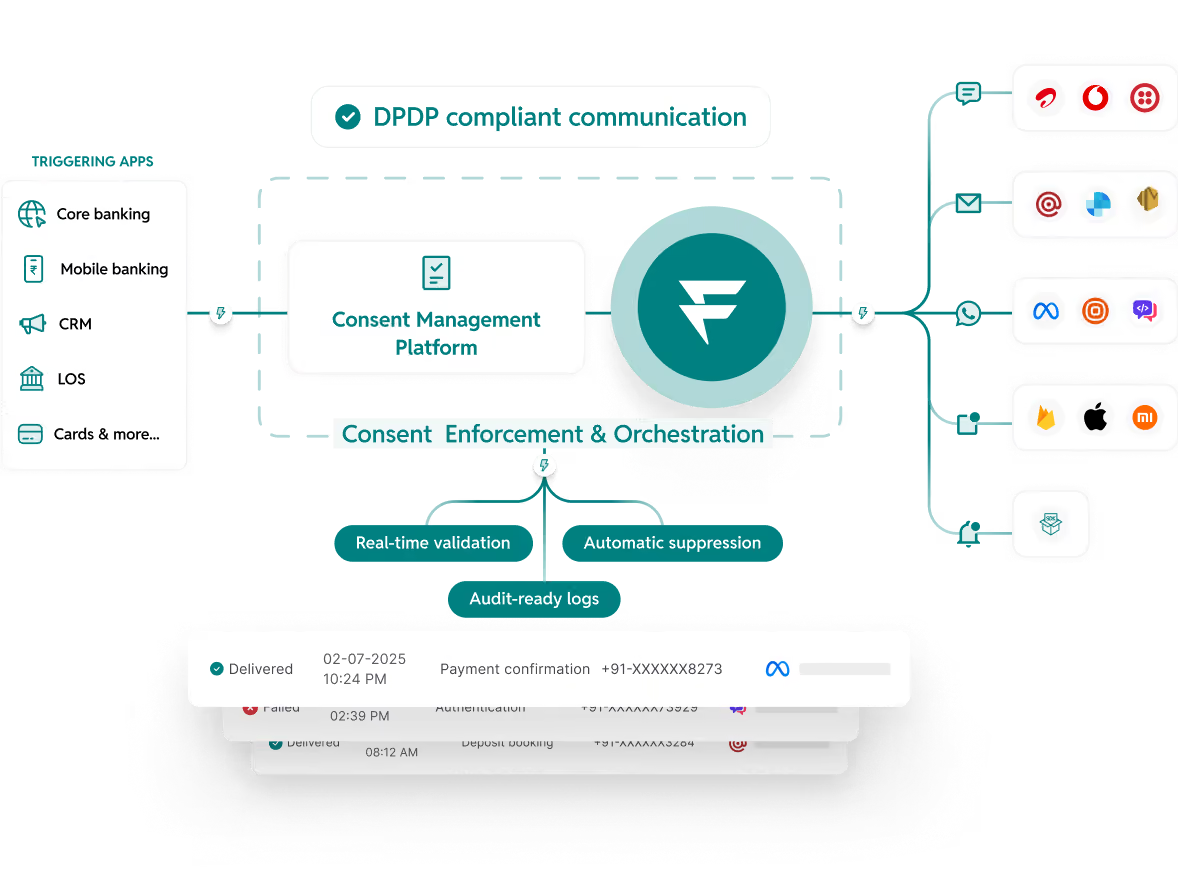
Consent management platforms do not control message delivery. Fyno bridges that gap with real-time consent validation, automatic suppression, and audit-ready logs across your entire messaging stack.
.webp)



.svg)
.svg)


.svg)

.webp)

.svg)
.svg)


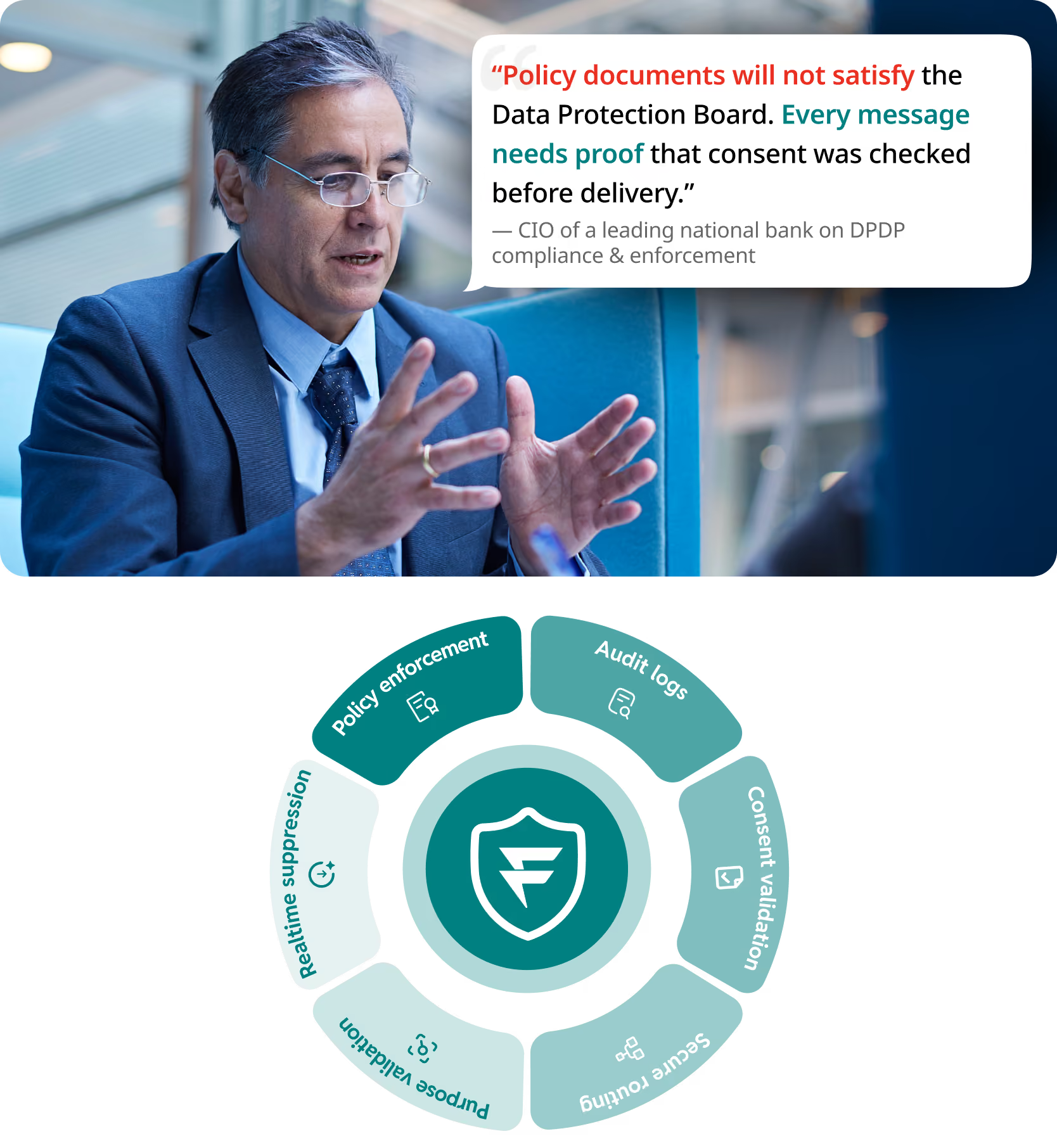
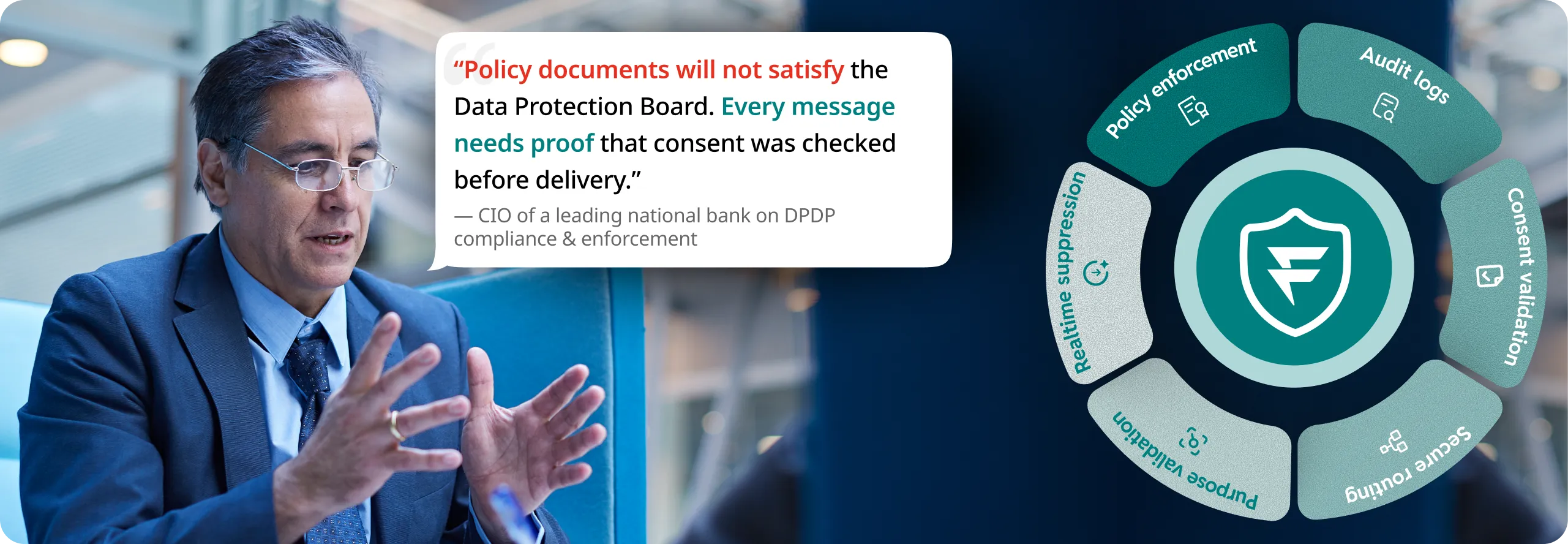
Never let a non compliant message reach your customer
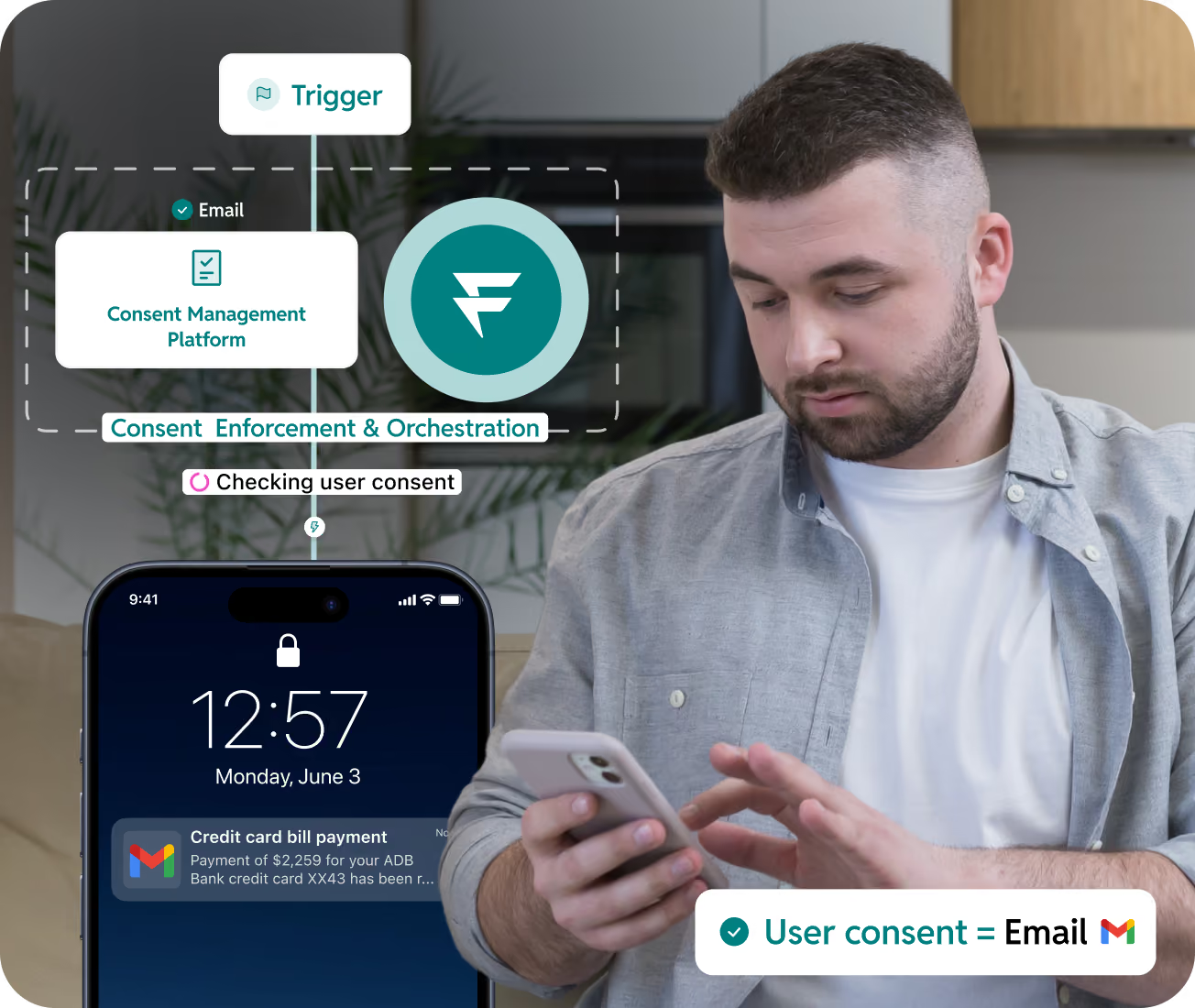
How does Fyno check consent before every send?
Fyno queries your CMP before every send. Valid consent means delivery proceeds. Missing or expired consent means the message is blocked and logged. No manual checks needed.
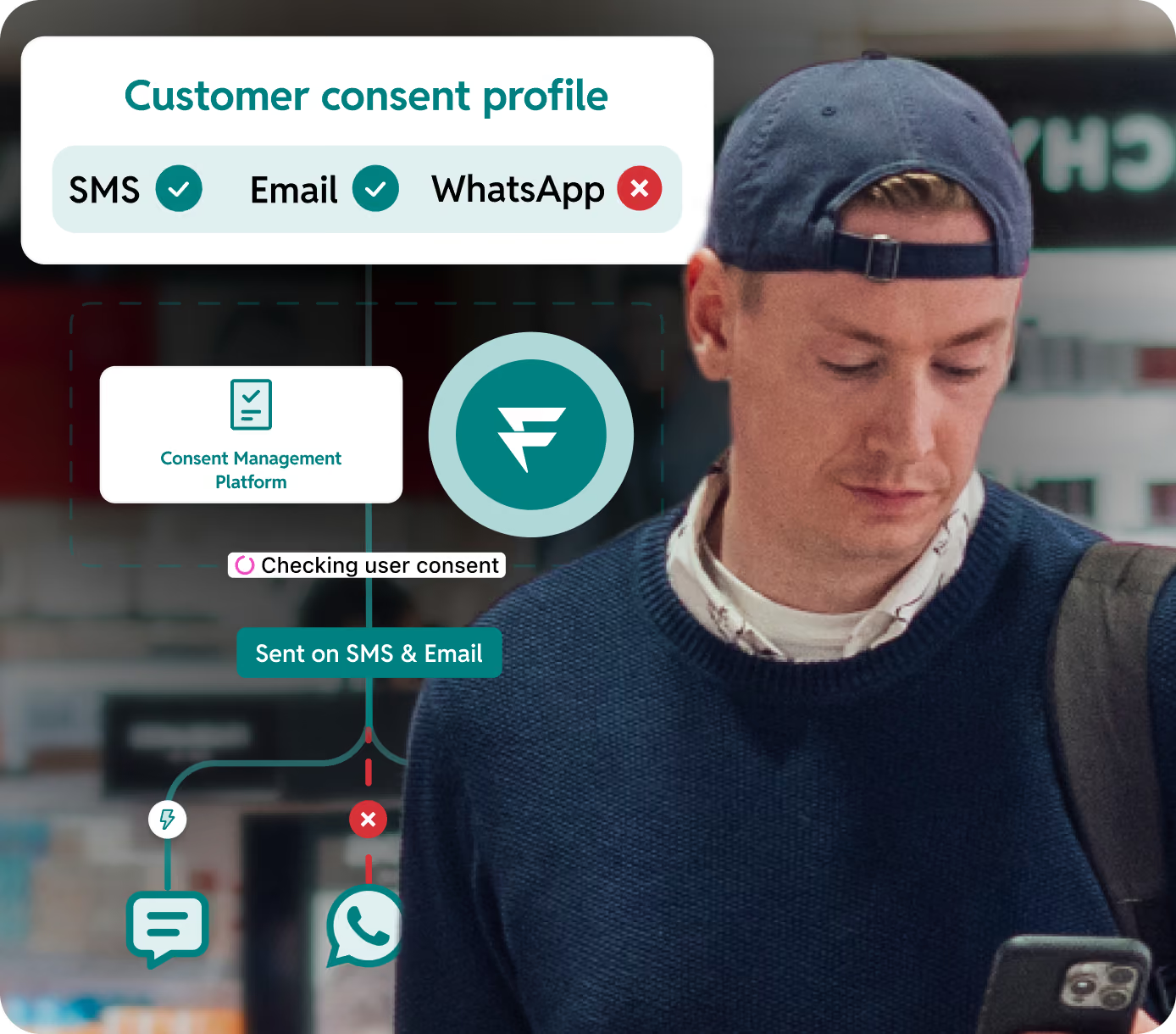
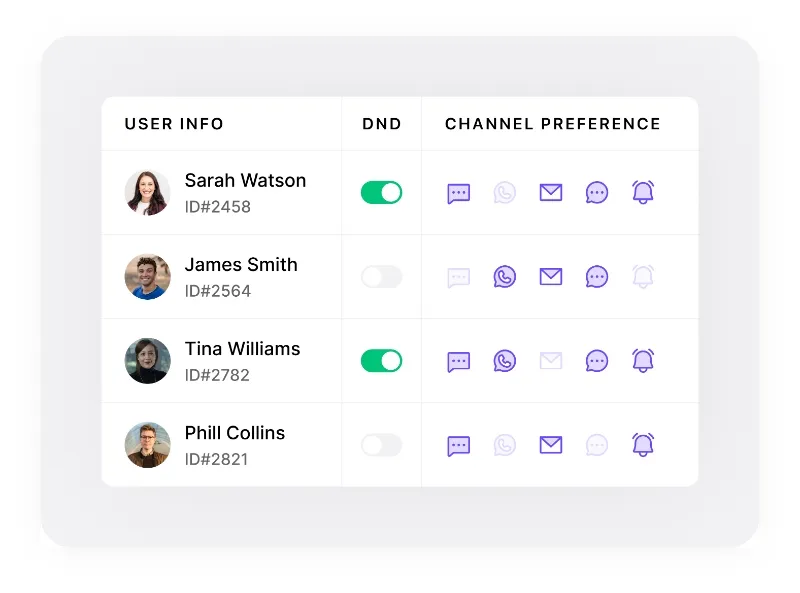
Route messages by channel-level consent
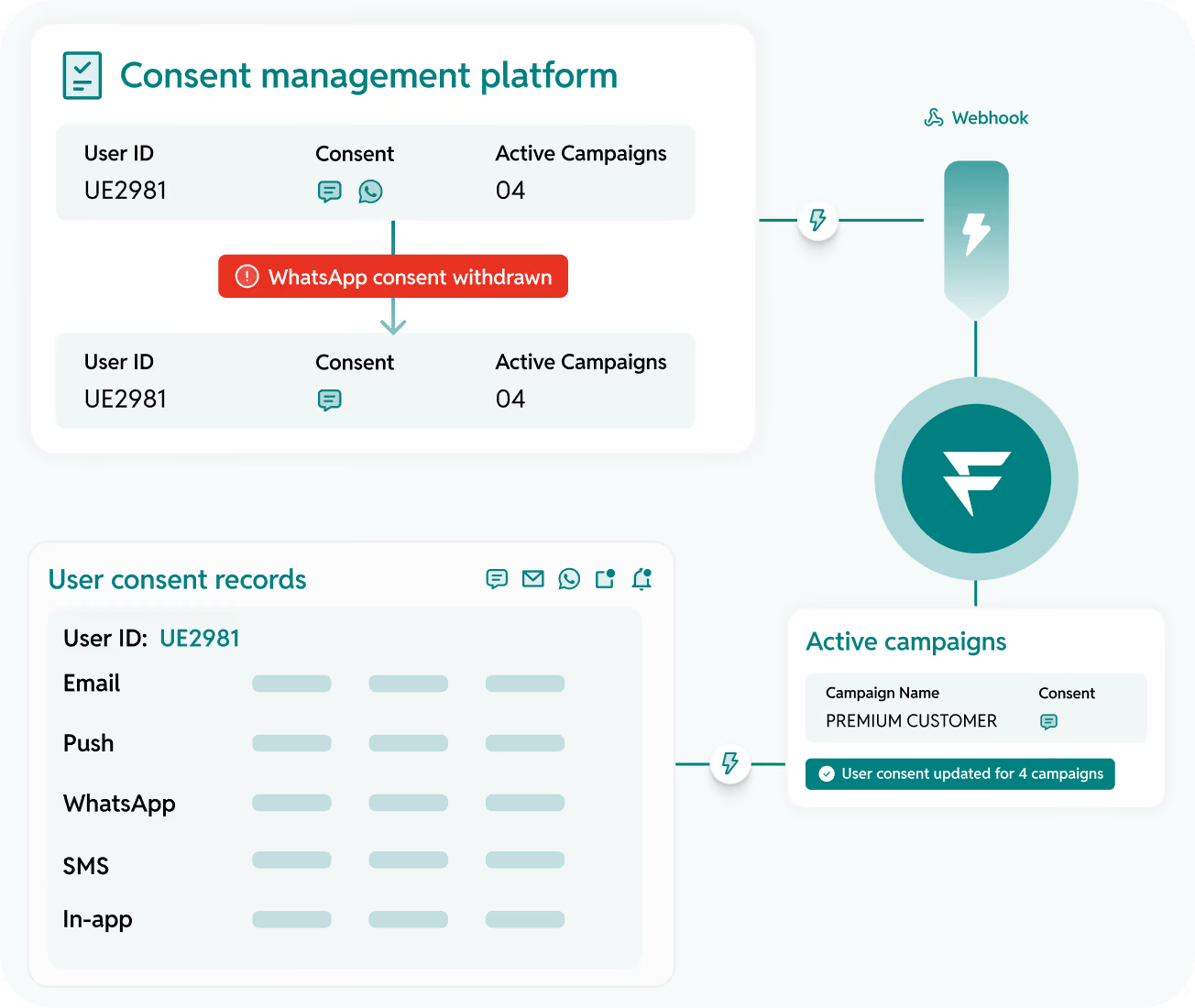
Consent withdrawn? Enforced
in seconds
Your CMP sends a webhook. Fyno updates suppression across every vendor within seconds. Active campaigns automatically exclude the withdrawn customer. Zero manual coordination.
Audit-ready proof for every delivery
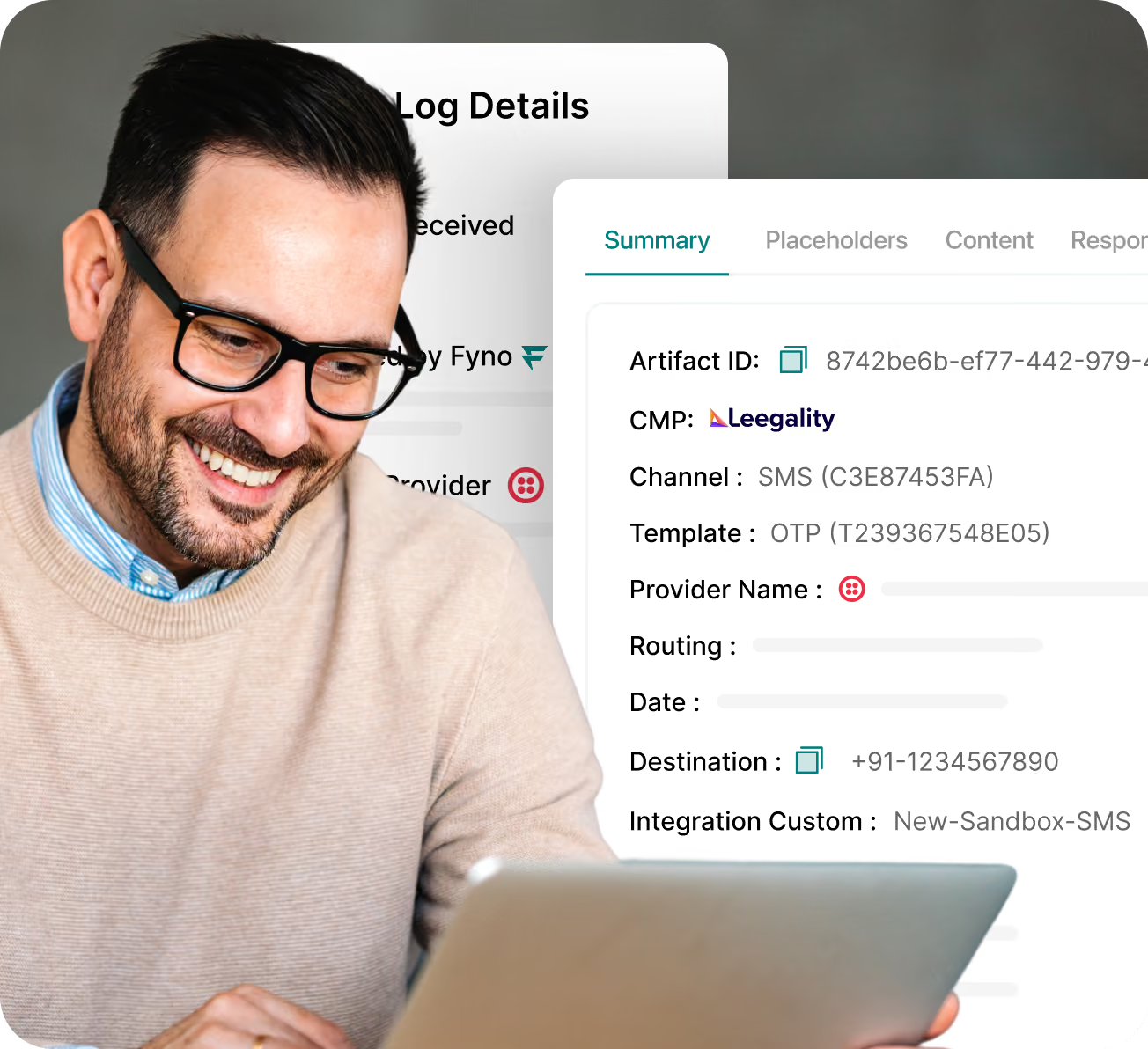
Every log links to a consent artifact ID from your CMP, along with the consent status, routing decision, vendor used, and delivery result. When a regulator asks, the answer is just one search away.
Works with any CMP or messaging vendor
Fyno connects to any consent management platform via REST APIs and webhooks. 100+ pre-built CPaaS integrations across SMS, WhatsApp, email, push, and voice. Switch vendors without rebuilds.

What is the DPDP compliance timeline for enterprises?
The DPDP Rules follow a phased rollout. Here is where things stand:
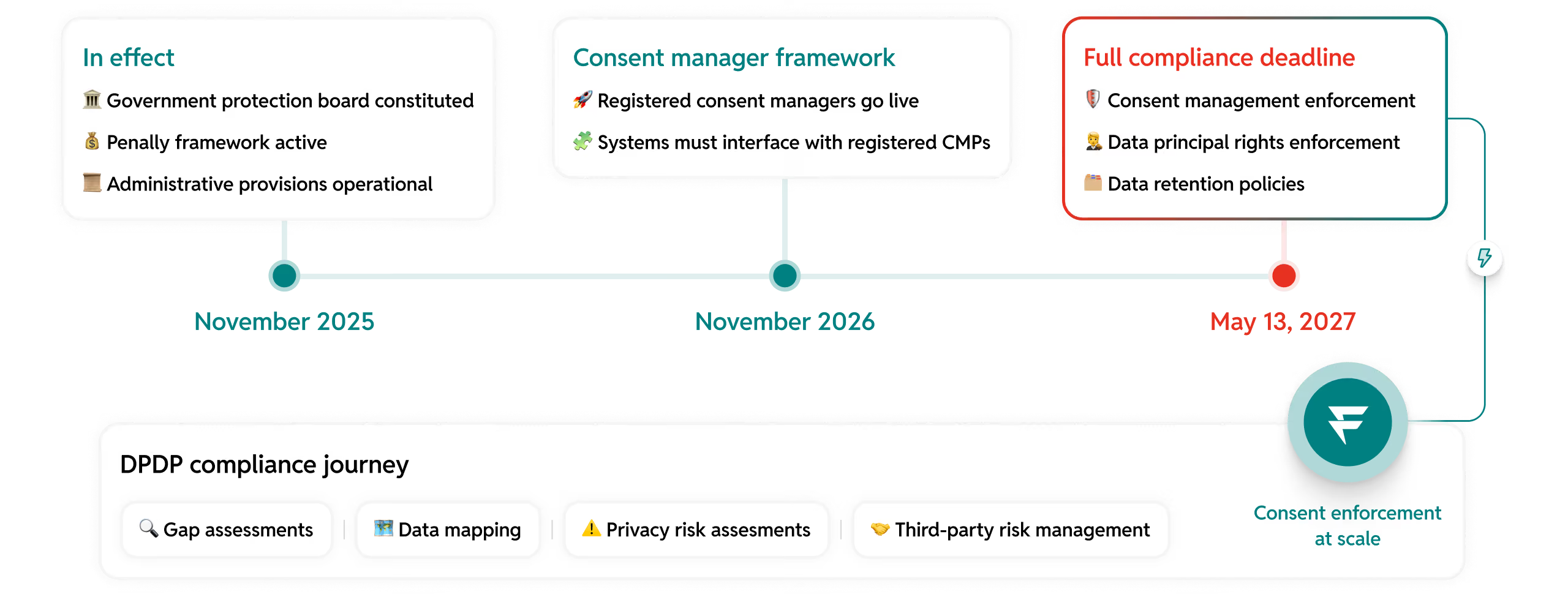
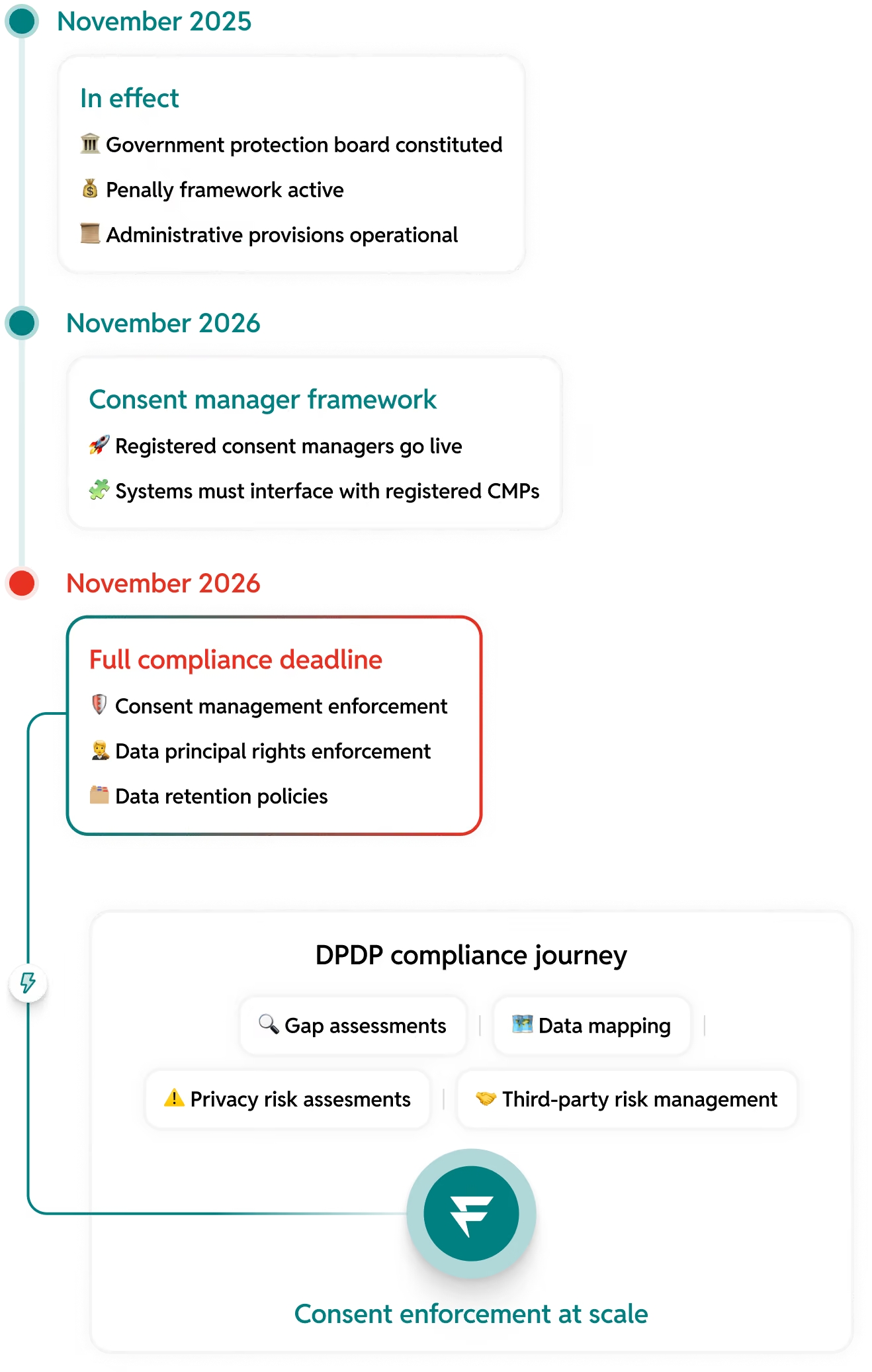
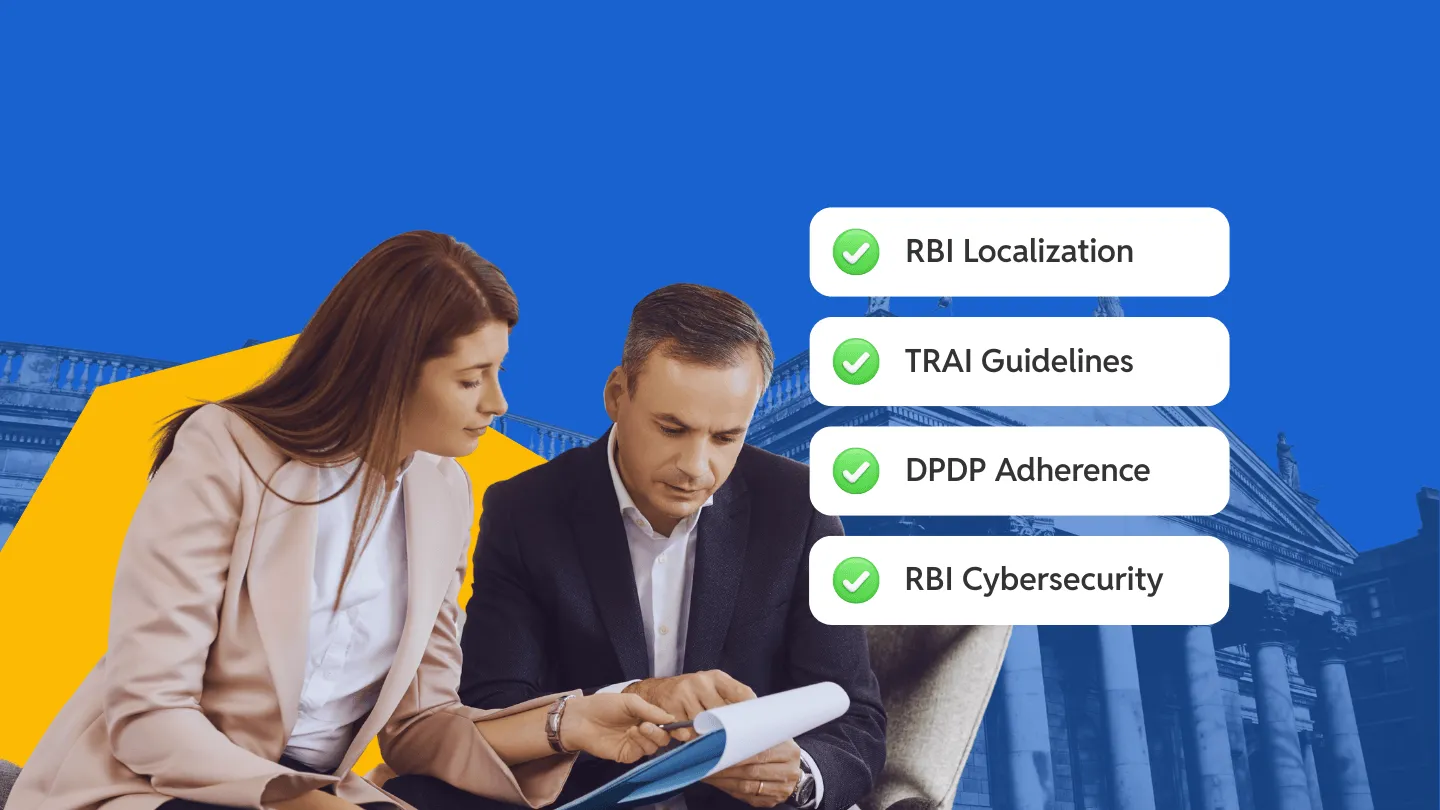
Fyno does not solve your entire DPDP compliance journey. That journey spans gap assessments, data mapping, privacy impact assessments, privacy office setup, third-party risk management, and more. But when your roadmap reaches the point where consent needs to be enforced on your millions of monthly messages across multiple vendors and channels, Fyno is the layer that makes it operational.
While you’re still here, check out some other use-cases!
Never let your customer miss an important notification
.avif)
Streamline your communication stack with Fyno's universal API
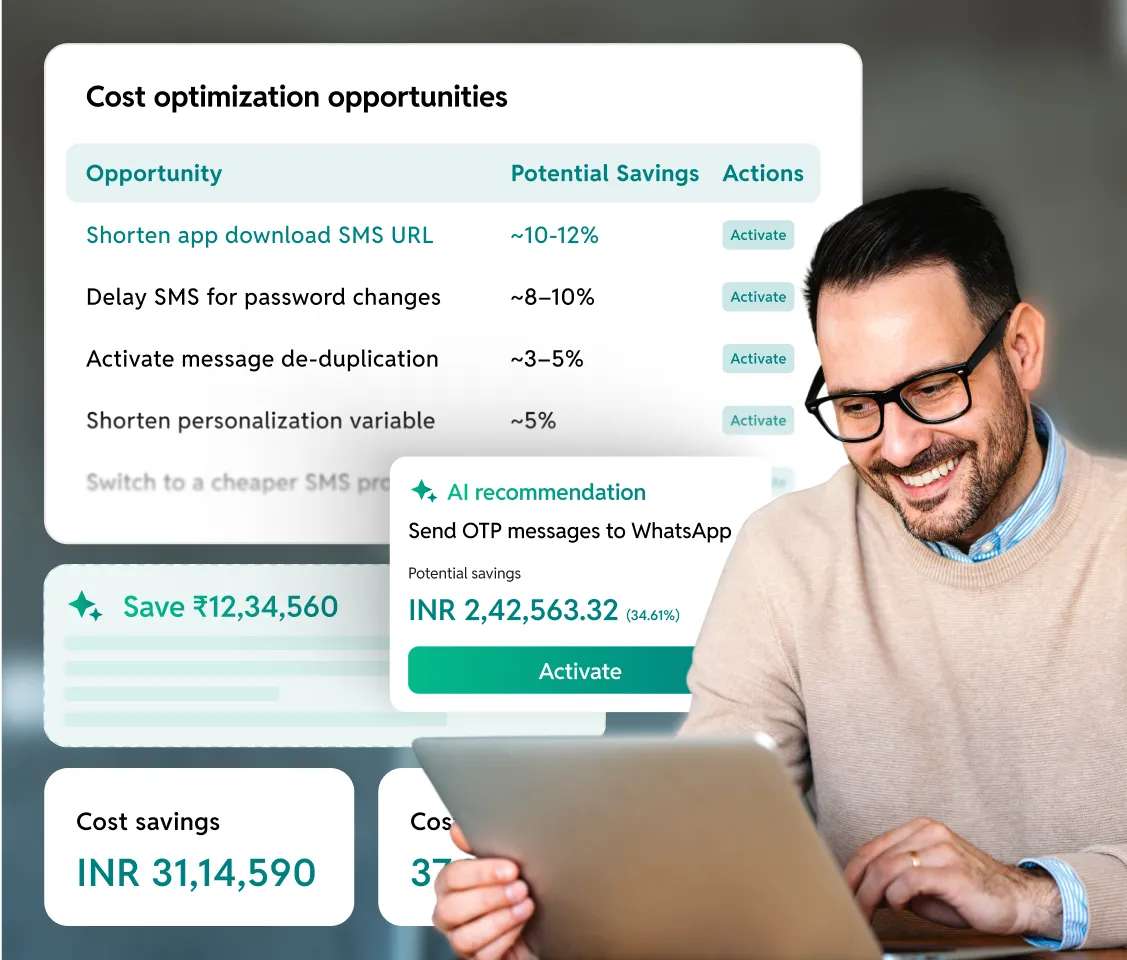
Save up to 40% on communication cost without any manual effort
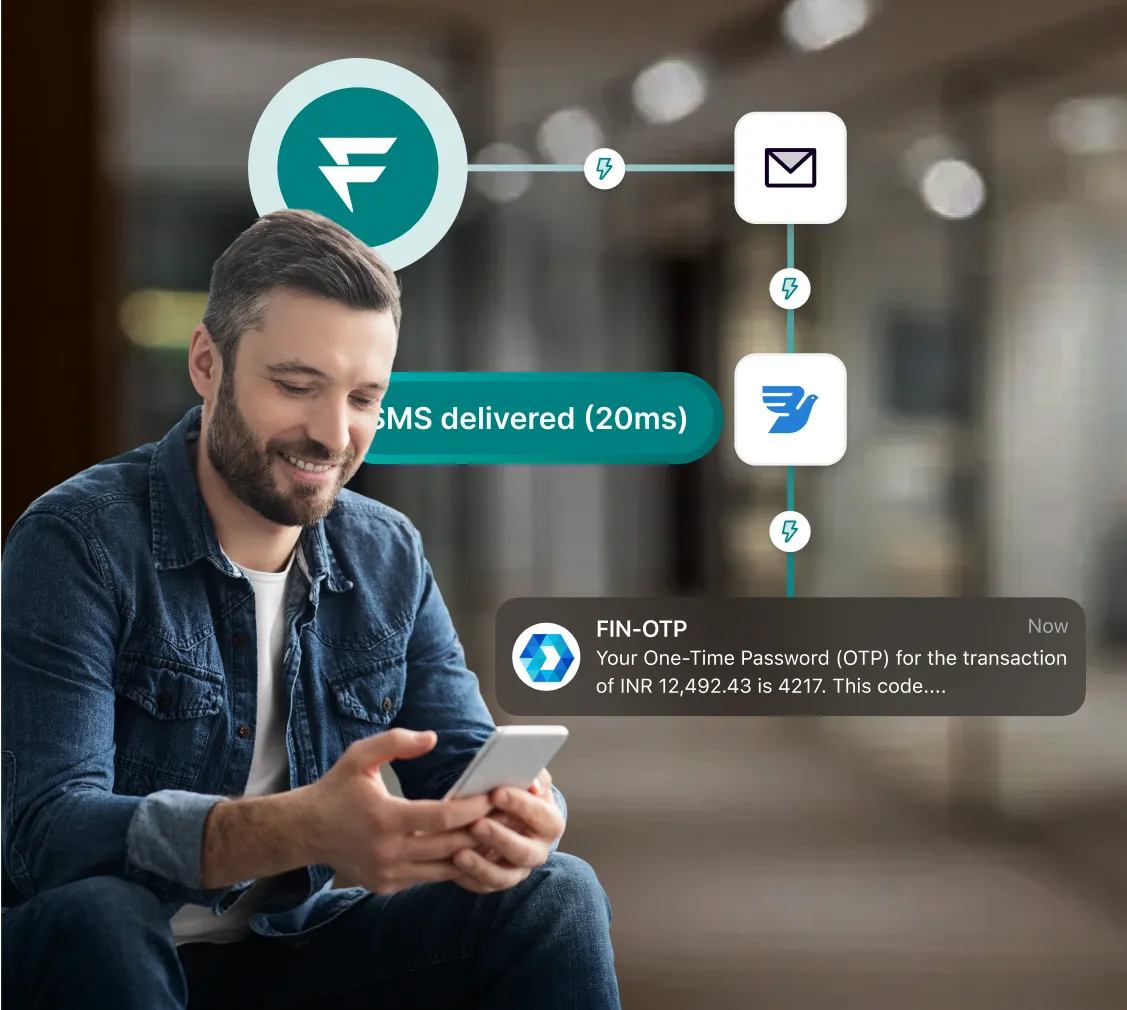
Processing every message with lightening speed
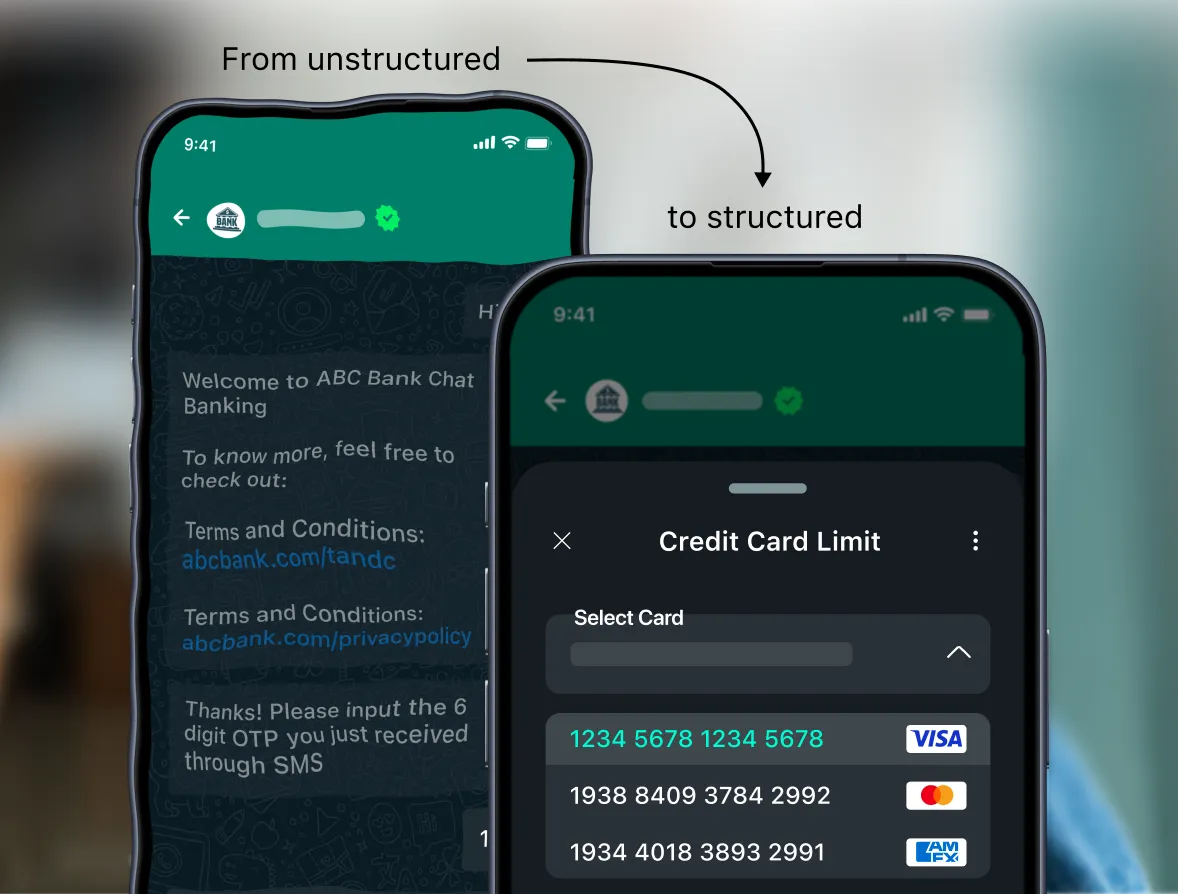
Upgrade your WhatsApp banking experience
Frequently asked questions about DPDP consent enforcement
DPDP compliance requires every business processing digital personal data of Indian residents to obtain free, specific, informed, and unambiguous consent before processing that data. Businesses must provide clear privacy notices in plain language (available in any of the 22 Indian languages). Also, enable customers to withdraw consent as easily as they gave it, implement reasonable security safeguards, report data breaches to the Data Protection Board and affected individuals within 72 hours, and appoint a Data Protection Officer based in India. For enterprises that send customer communications at scale, compliance also means ensuring that consent is validated before every promotional message is sent, not just at the point of collection. The full compliance deadline is May 13, 2027, with penalties up to INR 250 crore for violations.
Fyno embeds consent validation at the core of its communication workflows. Before any promotional message is sent, the platform queries your consent management platform to verify valid consent exists for that customer, channel, and message type. Messages are only delivered when consent is confirmed. Opt-outs, DND preferences, and channel-specific consent rules are enforced automatically across all connected vendors. Detailed, timestamped audit logs link every delivery to its corresponding consent artifact, making regulatory review straightforward.
"DPDP-ready" typically means the vendor can accept consent metadata in the message payload if you provide it and maintain basic delivery logs. It does not mean they integrate with your CMP, validate consent before accepting messages, block promotional sends when consent is missing, or enforce channel-level preferences. The architectural reality is that CPaaS platforms send what you tell them to send. The consent validation step needs to happen before the message reaches the CPaaS vendor.
When a customer withdraws consent, your CMP triggers a webhook to Fyno. Fyno immediately updates suppression lists across all integrated CPaaS vendors. The withdrawn customer is excluded from in-flight and future campaigns within seconds. Without an orchestration layer, each vendor requires separate manual suppression list updates, creating a window where non-compliant messages could be sent.
TRAI DLT requires SMS template registration, sender ID approval, and content compliance for spam prevention. It governs what you can send. DPDP requires explicit, purpose-specific consent before promotional messaging and gives customers the right to withdraw consent at any time. It governs who you can send to. Enterprises need both: DLT approval for the message template and DPDP consent for the recipient. Fyno enforces both in a unified routing decision.
Yes. Fyno integrates via standard REST APIs and webhooks with any consent system, whether commercial or custom-built. As long as your system provides consent status APIs and webhook support for consent changes, Fyno can query it before every send and enforce its decisions across all messaging vendors.
The DPDP Act is shifting customer messaging from an opt-out volume model to a consent-first permission-based ecosystem. Enterprises must obtain free, specific, and informed consent before any promotional messaging. Pre-checked boxes and buried consent clauses are no longer valid. Consent notices must be available in plain language and in any of the 22 Indian languages listed in the Eighth Schedule. Withdrawal must be as easy as giving consent. For enterprises sending millions of messages monthly, this means building (or buying) an enforcement layer that validates consent at the point of every send, not just at the point of collection.
The DPDP Act specifies significant financial penalties. Processing without valid consent carries fines up to INR 200 crore. Failure to implement reasonable security safeguards carries fines up to INR 250 crore. Failure to notify data breaches within 72 hours and failure to protect children's data each carry penalties up to INR 200 crore. Multiple violations result in separate, compounding penalties. The Data Protection Board of India also has the authority to publish violation details, creating reputational consequences beyond financial penalties.
Discover insights
Learn how teams streamline communication, manage templates, and scale faster with Fyno.


.svg)